The Long Walk to the Good Water: Why Japan's Hardest-to-Reach Hot Springs Are Worth Every Difficult Step
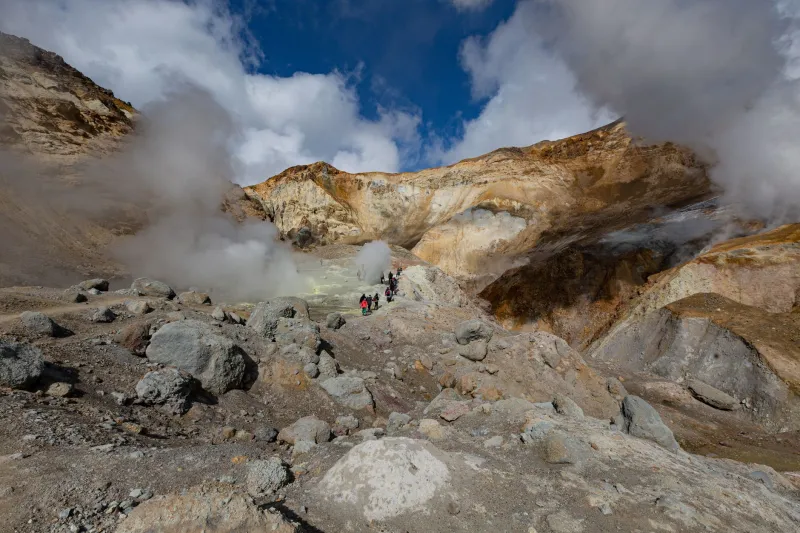
There's a rotenburo — an outdoor bath — about three hours into a trail in Nagano Prefecture that has no sign, no fee box, no changing room, and no cell signal. Getting there requires a topographic map, decent boots, and the willingness to ford a shallow creek twice. The water, when you finally lower yourself into it, smells faintly of sulfur and feels like something between a warm handshake and a full-body apology. People have been soaking in that spot for centuries. You will have earned every single minute of it.
This is not the onsen experience the internet usually sells you. Instagram prefers the lacquered ryokan version — cypress wood tubs, bamboo ladles, a yukata folded just so. And those places are genuinely wonderful. But there's another category of Japanese hot spring that doesn't photograph well, doesn't show up on booking platforms, and doesn't particularly care if you find it or not. These are the wild ones. The inconvenient ones. And if you're willing to work for them, they will rearrange something inside you.
Convenience Is Not Healing's Friend
American wellness culture has a deep and largely unexamined faith in ease. We believe, without really thinking about it, that the better a spa is, the more effortlessly it should deliver its results. Heated floors. App-controlled ambient lighting. A menu of upgrades available at checkout. The whole architecture is designed to remove friction — because friction, we've decided, is the enemy of relaxation.
Japan, in certain corners, disagrees.
The concept of katachi — form, structure, the right way of doing something — runs quietly through a lot of Japanese culture, including the culture around onsen. There's a reason the bathing ritual has a sequence. There's a reason you wash before you soak, that you enter quietly, that you don't bring your phone, that you don't rush. The form isn't arbitrary. It prepares you. It asks something of you before the water does its work.
Remote onsen take this further. They ask more before you even get there. A four-hour mountain hike asks something. A trailhead with no English signage asks something. Carrying your own towel and not knowing exactly what you'll find at the end asks something. By the time you arrive, you've already shed a version of yourself that needed things to be comfortable.
What Gets Left Behind on the Trail
Talk to anyone who's made the trek to a hikyou no yu — a secret or hidden hot spring — and they'll describe the walk in almost therapeutic terms. Not because it was easy, but because it wasn't.
One traveler from Portland, Oregon, spent forty minutes convinced she'd taken a wrong fork on a trail in the Japanese Alps before finding the small cairn that marked the correct path. She described sitting in the natural pool afterward as the most present she'd felt in years. "I couldn't think about my inbox," she said. "I was too busy just being somewhere."
That's not a coincidence. Cognitive load — the mental effort of navigating something genuinely uncertain — has a way of clearing out the background noise of ordinary life. You can't ruminate about your mortgage when you're reading a hand-drawn map in kanji. The difficulty becomes, paradoxically, the first stage of the unwinding.
This is something that no amount of spa design can manufacture. You can pipe in nature sounds, but you can't replicate the sound of actual wind. You can offer a salt scrub, but you can't replicate the feeling of having physically traveled toward something.
The Amenity Gap Is a Feature
Many of Japan's wild onsen — particularly the rojin-no-yu style pools that appear along river valleys and mountain streams — offer almost nothing in the way of amenities. A wooden plank to set your clothes on, if you're lucky. Water that's too hot in one corner and perfectly right in another. No attendant. No posted hours.
For Americans accustomed to the language of "the full spa experience," this can feel disorienting at first. What do you mean there's no locker? What do you mean I just... leave my stuff on a rock?
You leave your stuff on a rock. And then something interesting happens. Without the apparatus of the experience — the robe, the slippers, the curated playlist — you stop performing relaxation and start actually doing it. There's nothing to consume. There's only the water, the air, and however long you want to stay.
The Japanese have a phrase, ma, that refers to the meaningful pause — the space between things. Wild onsen are saturated with ma. Nothing is filled in for you. The silence isn't programmed. The view isn't framed. It's just there, and you're just there, and that's the whole thing.
Getting There Is Part of Getting Better
Western wellness has spent decades trying to optimize the path to feeling good. Faster results, less discomfort, more convenience. There's value in that — genuinely. Accessibility matters, and not every healing experience should require a mountain.
But somewhere in that optimization, we may have edited out something essential: the value of working toward your own restoration. Of earning the stillness rather than purchasing it.
Japan's remote hot springs aren't inaccessible because no one's gotten around to building a road yet. Many of them are protected precisely because access is limited. The difficulty is intentional. It's a filter — not to keep people out, but to ensure that the people who arrive are ready to receive what's there.
That's a philosophy worth sitting with, even if the nearest trailhead is twelve time zones away.
The good water is out there. It just requires the long walk first.