Your Body Figured Out It Was Safe Hours Before You Did
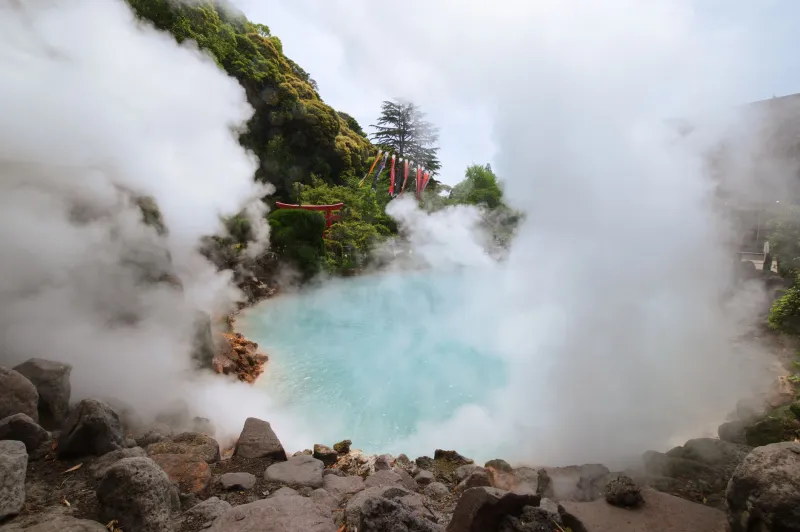
There's a moment — maybe you've had it, maybe you're still waiting for it — where you're sitting in a Japanese hot spring and something just releases. Not a thought you had. Not a decision you made. Something older than that. Something running on a completely different operating system.
You didn't choose to relax. Your body just started doing it without asking.
That's not poetic license. That's actually what happens — and the physiology behind it is worth understanding, especially if you've ever come home from an onsen trip feeling genuinely different and struggled to explain why to anyone who wasn't there.
The Nervous System Gets There First
When you step into hot spring water — properly mineral-rich, properly hot, the kind that makes you pause at the edge for a second before committing — your autonomic nervous system begins shifting states almost immediately. The parasympathetic branch, the one responsible for rest and recovery, starts taking the wheel away from its counterpart, the sympathetic system, which has likely been running your life for the past several months.
This isn't something you feel as a thought. It registers as a physical exhale that feels bigger than a normal breath. A slight heaviness in the shoulders. A warmth that seems to move inward rather than stay on the surface.
The vagus nerve — a long, wandering cranial nerve that connects your brain to your heart, lungs, and gut — plays a significant role here. Heat and immersion both stimulate vagal tone, which is essentially a measure of how efficiently your body can move between stress and rest states. Higher vagal tone is associated with better emotional regulation, lower inflammation, and improved cardiovascular resilience. You don't need to know any of that while you're soaking. Your body is just quietly doing the accounting.
Cortisol Doesn't Care About Your Itinerary
Cortisol is the hormone most Americans are carrying around in excess. Chronic stress, poor sleep, constant digital input, the general ambient pressure of modern life — it all adds up to elevated baseline cortisol levels that your body eventually stops recognizing as unusual.
Research on thermal bathing has shown that regular immersion in hot water can meaningfully reduce cortisol levels, sometimes within a single session. But here's the part that catches people off guard: the reduction often happens before the mental experience of calm fully arrives.
You might still be mentally rehearsing a work conversation. You might still be vaguely annoyed about something that happened at the airport. But your cortisol is already dropping. Your heart rate is already slowing. Your body has made a unilateral decision about the situation and filed the paperwork without consulting you.
This is partly why so many American visitors describe a kind of delayed realization — they don't notice they were tense until they're no longer tense. The body got there first. The mind is just catching the bus a few stops later.
Why Mineral Water Hits Different
Not all hot water produces the same response. There's a reason Japanese onsen culture distinguishes so carefully between spring types — sulfur baths, sodium chloride baths, iron-rich waters, carbonated springs — and it isn't just tradition for tradition's sake.
Transdermal absorption of minerals like magnesium, which is present in many onsen waters, may contribute to the relaxation response. Magnesium plays a role in regulating the nervous system and muscle function, and a significant portion of the American population is chronically deficient in it. Sitting in mineral-rich water for 20 to 40 minutes allows some of that to move through the skin in ways that a supplement sitting on your nightstand simply doesn't replicate.
The waters at places like Hirayu, tucked into the Japanese Alps with a spring history stretching back centuries, carry a particular mineral profile shaped by the geology of the surrounding mountains. There's something almost geological about the relaxation — like the earth has been working on this formula for a very long time, and you're just the latest beneficiary.
The Temperature Gradient Is Doing Something
Most American bathing culture doesn't involve much temperature variation. You set the shower to comfortable and you stay there. Japanese onsen culture, by contrast, has long incorporated the practice of moving between hot soaks and cooler air — or, in some cases, cold water — as an intentional rhythm.
This alternation isn't just bracing. It triggers a process that cardiovascular researchers have studied in the context of Nordic bathing traditions: repeated thermal cycling strengthens the vascular system's ability to dilate and contract, improves circulation, and produces a sustained boost in endorphins that can last for hours after you've dried off and put your yukata back on.
By the time you're sitting down to dinner at your ryokan, your body has run a quiet cardiovascular workout that your brain registered as leisure. That's a genuinely remarkable thing.
The Gap Between What Happens and What We Can Say About It
Here's where it gets philosophically interesting: most people who've had a meaningful onsen experience struggle to articulate it accurately. They'll say things like "I just felt so calm" or "it was like everything slowed down" — which is true but incomplete. What they're reaching for is a description of a whole-body state change that English doesn't have great vocabulary for.
Japanese culture has yugen — a sense of mysterious, profound awareness — and ma — the meaningful quality of empty space and time. Neither translates cleanly. But both gesture toward experiences that bypass the verbal mind entirely and land somewhere more fundamental.
The body knows this territory. It's been traveling there for as long as humans have sat in warm water together. Your prefrontal cortex, the part that narrates your experience and turns it into a story you can tell at brunch, is genuinely the last to arrive.
What to Do With This Information
Honestly? Not much. You don't need to optimize your onsen experience. You don't need to track your heart rate variability or bring a mineral test kit or read a neuroscience paper before you lower yourself in.
What this understanding does offer, though, is a kind of permission. Permission to trust what your body is doing even when your mind is still catching up. Permission to stay in the water for another ten minutes when you feel the shift starting. Permission to come home from Japan and tell people that something real happened to you, even if you can't fully explain what it was.
Your nervous system was paying attention the whole time. It knew you were safe. It started the work before you even realized work needed doing.
That's not magic. It's just the oldest medicine there is — heat, water, stillness, and enough time for the body to remember what it already knows how to do.