Why the Smartest Idea You'll Have This Year Won't Come From a Brainstorm — It'll Come From a Bath
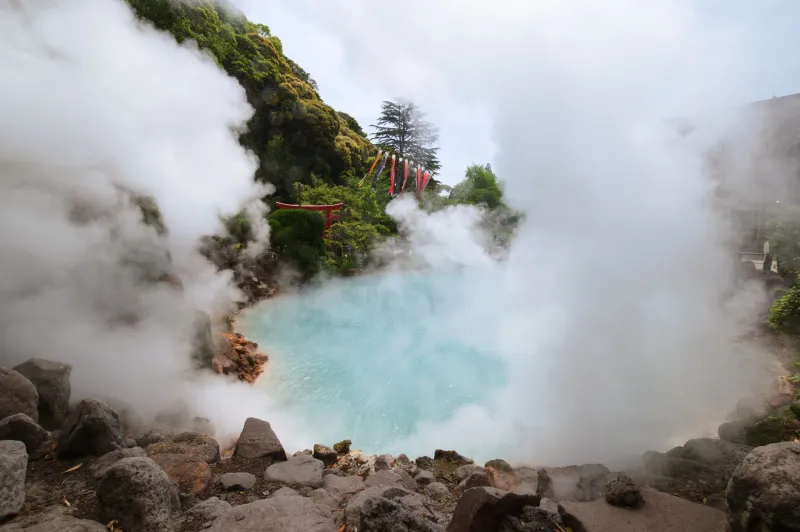
Somewhere between the third and fourth minute of sitting in a 104-degree mineral bath in the Japanese Alps, something weird happens to your brain. The mental noise — the Slack notifications you can still feel even though your phone is locked in a wooden cubby fifty feet away, the half-finished pitch deck, the meeting you're dreading Monday morning — it doesn't just quiet down. It dissolves. And then, almost embarrassingly, the answer you've been chasing for three weeks just shows up.
This isn't mysticism. It's neuroscience. And it's been hiding in plain sight inside Japanese onsen culture for hundreds of years.
The Meeting Room Is the Problem, Not the Solution
Here's something American work culture doesn't like to admit: the places we've designed for creative thinking are almost perfectly engineered to prevent it.
Fluorescent lighting. Dry-erase boards. Swivel chairs. Laptops open. Everyone performing focus while actually half-composing an email in their head. The brainstorm session, that beloved staple of corporate America, puts people in exactly the wrong neurological state for original thought. High social stakes, performance pressure, and the ambient hum of judgment — conscious or not — activate the brain's threat-response systems. And a brain scanning for threats is not a brain generating ideas.
Japanese onsen culture figured out the opposite formula a long time ago.
What Heat Actually Does to Your Thinking Brain
When you lower yourself into a hot spring, your body responds in a cascade of measurable ways. Core temperature rises. Blood vessels dilate. Heart rate slows to something closer to sleep. Cortisol — the stress hormone that keeps you sharp and reactive and, crucially, not particularly creative — begins to drop.
What replaces it is more interesting. Elevated body temperature has been linked to increased serotonin activity and a mild but real boost in dopamine. The combination produces what researchers sometimes call a "diffuse thinking state" — the mental mode associated not with focused problem-solving but with the kind of loose, associative cognition that connects unrelated ideas in unexpected ways. It's the same state you're in during a long shower when the solution to something suddenly appears out of nowhere. Onsen just sustains it longer and goes deeper.
There's also the sensory element. Hot spring water — especially the mineral-rich kind flowing out of places like Hirayu, with its sodium bicarbonate and calcium content — creates a specific kind of physical absorption. Your skin is doing something. Your body is engaged. And paradoxically, that full-body physical presence frees your mind in a way that staring at a screen never does.
The Naked Part Matters More Than You'd Think
American readers tend to get a little hung up on the nudity aspect of traditional onsen bathing. Understandable. But the nakedness isn't incidental — it's actually central to why onsen works as a thinking environment.
In Japanese, there's a concept called hadaka no tsukiai, which translates roughly as "naked communion" or "skinship." The idea is that when you strip away clothing — the visual markers of status, profession, and social role — something shifts in how people relate to each other and, perhaps more importantly, to themselves. The armor comes off. Literally.
For creative professionals, this matters enormously. So much of what blocks original thinking isn't a lack of ideas — it's the internal editor, the self-monitoring voice that filters every thought through the question of how it'll land. Onsen, with its enforced vulnerability and its cultural norm of quiet presence, has a way of muffling that voice.
Josh, a brand strategist from Portland who spent two weeks at a ryokan near Hirayu last spring, put it bluntly: "I've done meditation retreats, I've tried flotation tanks, I've paid a lot of money for a lot of different versions of this. Nothing came close. There was something about being physically vulnerable in a space where everyone else was too — it just turned off the part of my brain that was trying to look smart."
The idea he'd been struggling to articulate for a client for six weeks? It came to him on day three. He sketched it out on the back of a yukata pamphlet.
Why Japanese Creatives Have Always Known This
In Japan, the connection between onsen and intellectual breakthroughs is practically cultural mythology. Writers, politicians, and business executives have long retreated to hot spring towns not for vacation in the Western sense, but for the specific cognitive reset that only this kind of immersion provides. The novelist Yasunari Kawabata wrote portions of Snow Country while staying near an onsen. Corporate retreats in Japan often include dedicated soaking time — not as a perk, but as part of the working process.
There's even a Japanese phrase — yu no chikara, or "the power of hot water" — that gestures at something broader than physical relaxation. It implies a kind of clarifying force. A way of seeing more clearly.
American entrepreneurs are starting to encounter this not through cultural study but through direct experience. Mara, a tech founder from Austin, took her first solo trip to Japan after a funding round fell through and found herself at a small onsen inn in the mountains with no agenda and no Wi-Fi. "I wasn't trying to solve anything," she says. "I was honestly just trying not to think. And then I started thinking better than I had in years."
She came home with the restructured pitch that eventually closed the round.
What You Can Actually Take Away From This
None of this means you need to book a flight to Japan every time you hit a creative wall. But the principles embedded in onsen culture point toward something actionable — even if the full experience requires showing up in person.
The conditions that make onsen productive for thinking aren't random. They're: sustained heat, physical stillness, social presence without performance pressure, removal of digital input, and a cultural container that makes it okay to just be without producing anything. You can approximate some of this. You cannot fully replicate it.
The real argument for actually going — for getting yourself to a place like Hirayu, undressing, lowering into the water, and staying there for longer than feels comfortable — is that the full combination is greater than the sum of its parts. The mineral content, the mountain air, the quiet, the absence of your usual context, the hours of unhurried time: together, they create a neurological environment that your home shower simply cannot match.
American work culture tends to treat rest as the enemy of productivity. Japanese onsen culture has always understood the opposite — that the deepest thinking happens not when you push harder, but when you finally, completely, let go.
The ideas are already in there. The hot water just helps you find them.