Naked, Relaxed, and Totally Clueless: How to Actually Survive Your First Japanese Onsen
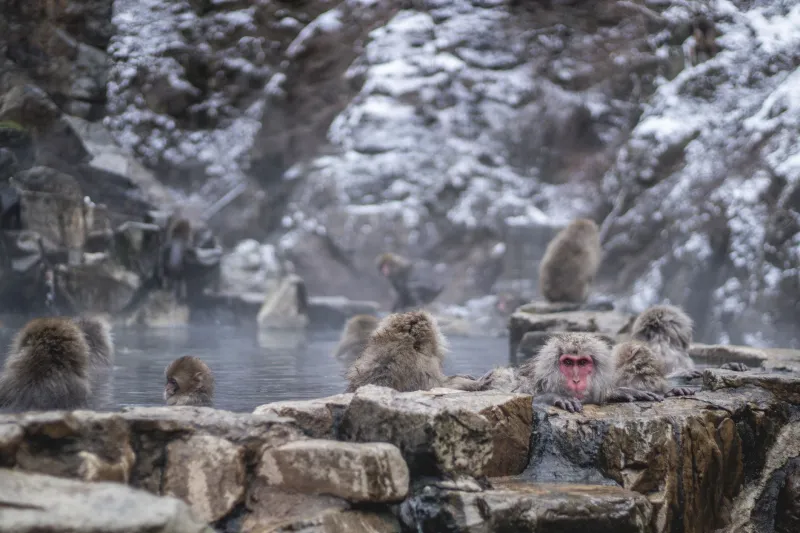
Let's be honest. The first time most Americans hear that Japanese hot spring bathing involves stripping down completely, scrubbing yourself in front of strangers, and then sitting in near-scalding water in total silence, the reaction is somewhere between nervous laughter and a firm "no thank you."
But here's the thing — once you understand why each part of the onsen ritual exists, the whole experience transforms. What looks like a bizarre social obstacle course from the outside is actually one of the most thoughtful, calming wellness traditions on the planet. And with a little prep, you can walk into any bathhouse in Japan feeling ready, respectful, and genuinely at ease.
This isn't a list of rules to memorize out of fear. Think of it more like getting a backstage pass to one of Japan's most intimate cultural experiences.
First Things First: Leave Your Swimsuit at the Inn
Yes, really. Traditional Japanese onsen — especially the indoor communal baths called sento or the outdoor pools called rotenburo — are clothing-free spaces. This applies to both men and women, who bathe in gender-separated areas in most facilities.
The reasoning is practical and philosophical at the same time. Clothing traps soap, bacteria, and detergent, which would contaminate the shared water. But beyond hygiene, there's a cultural concept at play here called hadaka no tsukiai, which roughly translates to "naked communion." The idea is that when everyone strips away their clothes — and by extension, their social status, their job title, their wealth — genuine human connection becomes possible. You're just people, soaking in the same water.
For Americans raised in a culture where public nudity is almost universally taboo, this takes a beat to process. But most first-timers report that within about five minutes of entering the bath, the self-consciousness fades completely.
The Washing Area Is Not Optional
Before you even think about getting into the communal pool, you need to wash. This is the single most important rule in any onsen, and skipping it is the equivalent of showing up to someone's dinner party and putting your shoes on the table.
Every bathhouse has a washing area lined with small stools, handheld showerheads, and usually a full set of soap and shampoo. Here's how it goes:
- Sit on the stool (don't stand — it keeps splashing to a minimum and respects the person next to you)
- Use the handheld shower to thoroughly rinse your entire body
- Soap up, shampoo your hair, and scrub properly — not a quick rinse, a real wash
- Rinse off completely before approaching the communal bath
The communal water is for soaking and relaxing, not for cleaning. Entering without washing first is considered deeply inconsiderate, and you will get looks. Wash first, every time, no exceptions.
Tattoos: The Complicated Part
Many traditional onsen in Japan still maintain policies that prohibit tattooed guests from entering communal baths. This stems from a historical association between tattoos and organized crime in Japan, though attitudes are slowly shifting — particularly in areas that cater to international tourists.
If you have visible tattoos, it's worth calling ahead or checking the facility's policy before you show up. Some onsen offer private rental baths (kashikiri buro) that can be a great alternative. Others in tourist-heavy areas have relaxed their rules entirely. It varies widely, so do your research ahead of time rather than showing up and finding out the hard way.
Getting In: Temperature Is Not a Suggestion
Japanese onsen water runs hot. We're talking 104°F to 110°F (40°C to 43°C) in many pools, which is significantly warmer than the average American hot tub. The mineral content of the water — sulfur, sodium bicarbonate, iron, and others depending on the spring — also changes how the heat feels on your skin.
The approach matters. Don't cannon-ball in. Lower yourself in slowly, giving your body time to adjust. If a pool feels genuinely too hot, it's completely acceptable to sit on the edge with just your feet submerged for a few minutes before easing in fully. Many bathhouses also offer cooler pools for exactly this reason.
Keep your small towel (provided at most inns or available to purchase) out of the water. You can fold it and rest it on your head — you'll see locals do this all the time, and it actually helps regulate your body temperature. Do not dip it in the communal bath.
The Silence Thing Is Real, and It's Wonderful
Onsen are not social mixer events. They're not the place to strike up a loud conversation about your travel itinerary or FaceTime someone back home. The atmosphere is intentionally quiet and contemplative — closer to a meditation space than a party.
This doesn't mean you can't exchange a polite nod or a soft sumimasen (excuse me) if you need to move past someone. But the general vibe is one of inward focus. People are there to decompress, to let the mineral water do its work, to simply be for a little while.
For visitors from the US, where silence in a social setting can feel awkward, this is actually one of the most valuable parts of the experience. Sit in the water. Watch the steam rise. Look at the mountain view if you're lucky enough to have one. Let your mind go quiet. That's the point.
A Few More Things Worth Knowing
Hair stays out of the water. If your hair is long, tie it up before entering the bath. Loose hair floating in the communal pool is a hygiene issue.
Don't bring your phone into the bath area. This is both a privacy and a respect issue. Photos in changing rooms or bathing areas are absolutely off-limits.
Hydrate. The combination of hot water and mineral immersion is genuinely dehydrating. Most onsen have water available near the exit. Drink some before and after.
Go slow. Limit your initial soaks to about 10-15 minutes, especially if you're not used to the heat. You can always return to the bath after a rest.
The Payoff Is Real
Once you've done it — really done it, washed properly, eased into the water, sat in the quiet steam — something shifts. The onsen stops being an intimidating cultural test and becomes exactly what it's always been for the Japanese people who've practiced this ritual for centuries: a place to genuinely rest.
At Hirayu Onsen, where the water comes up from volcanic depths rich with minerals and the mountains sit right outside the bath windows, that feeling hits especially hard. It's the kind of rest that a weekend in Vegas or a beach resort simply doesn't deliver.
You came to Japan for something real. The onsen is as real as it gets.