Bath by Bath, Step by Step: How Americans Are Building Sacred Healing Routes Through Japan's Hot Springs
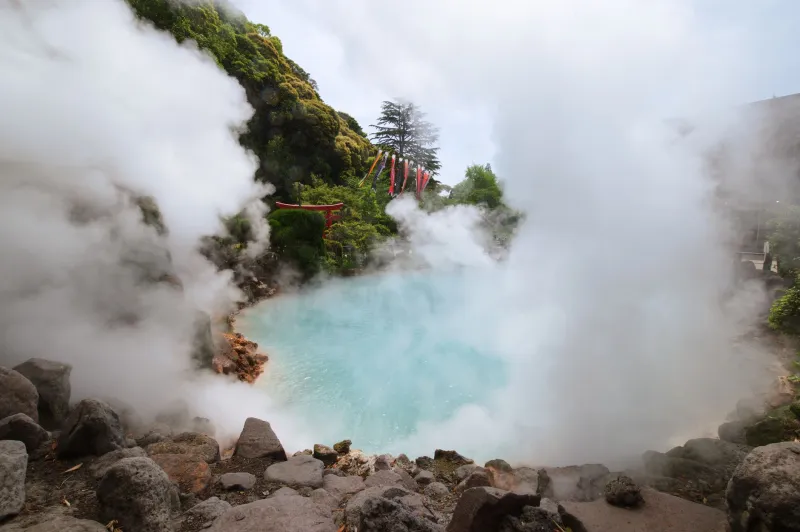
There's a word in Japanese — meguri — that roughly translates to "going around" or "making a circuit." Pilgrims have used it for centuries to describe journeys between sacred sites: temples, shrines, mountain passes. These days, a quieter kind of pilgrim is borrowing the concept. They're not walking the Shikoku 88-temple circuit. They're soaking their way across Japan, one carefully chosen hot spring at a time, with intentions written on scraps of paper and tucked into the front pocket of a well-worn travel journal.
This is the onsen pilgrimage — and it's becoming one of the most quietly transformative travel trends among Americans who've grown tired of wellness tourism that looks better on Instagram than it feels in real life.
Why a Guidebook Can't Tell You Where to Go
Kelly, a 38-year-old occupational therapist from Portland, Oregon, spent three weeks in Japan last spring following what she calls her "grief circuit" — a self-designed route through five onsen regions she'd researched over the course of a long, difficult winter. Her mother had died in October. By February, she knew she needed to go somewhere. She just didn't know where, exactly, until she started mapping it.
"I didn't want to go somewhere famous," she says. "I wanted to go somewhere that matched what I was carrying."
She started with Nyuto Onsen in Akita Prefecture — remote, snow-buried, the kind of place where the silence isn't peaceful so much as absolute. Then south to Kurokawa in Kumamoto, where the outdoor baths are carved into a forested gorge. Then east to a small inn near Suwa in Nagano that she found mentioned in a single online forum post from 2011. "I don't know why that one called to me," she says. "It just did."
That instinct — choosing based on feeling rather than star ratings — is at the heart of what separates an onsen pilgrimage from an onsen vacation.
The Ritual Is the Point
When you visit one onsen, you have an experience. When you visit five or eight over the course of two or three weeks, following your own internal logic from one to the next, something different starts to happen. The ritual compounds. The quiet accumulates. You start to recognize what the water is doing to you — not just to your skin or your muscles, but to the part of you that narrates your own life.
Marco, a 45-year-old high school teacher from Albuquerque, did his first onsen circuit two years ago as a way of processing a divorce he hadn't fully admitted was devastating him. He mapped his route around water chemistry — sulfurous springs in Beppu, iron-rich baths in Arima, milky silica waters in Noboribetsu — partly because he's a science teacher and it gave him a framework, and partly because he needed a reason that didn't require him to say out loud that he was heartbroken.
"By the third stop, I stopped caring about the minerals," he says. "I was just sitting in the water thinking. Really thinking. Not the anxious kind. The other kind."
He's gone back every year since. The route changes. The intention changes. The ritual stays the same.
How People Are Actually Building These Routes
There's no app for this, which might be part of the appeal. The Americans who are doing it tend to describe a similar process: a starting question or intention, a loose geography, and then weeks of research through Japanese tourism sites, onsen-specific forums, old travel essays, and sometimes direct emails to ryokan owners who speak just enough English to answer.
Some organize their circuits thematically — by water type, by region, by the kind of landscape they need around them. Others organize by mood: one traveler described planning her route around "baths that face water" after a year spent entirely inland. Another built his entire three-week circuit around rotenburo — outdoor baths — because he needed to be under open sky.
The common thread is intention. These aren't people who decided to visit Japan and added some hot springs to the itinerary. These are people who decided, first, what they needed — and then found the water that matched it.
What Keeps Happening in the Bath
Ask anyone who's done a multi-week onsen circuit what surprised them most, and they'll usually pause before answering. The pause is telling.
"I thought I'd get bored," admits Rachel, a 41-year-old copywriter from Chicago who spent eighteen days moving through six onsen towns in Tohoku and the Japan Alps. "Same basic thing every day — strip down, get in hot water, sit there. But it never got boring. It got deeper."
What she means is hard to explain without sounding like a brochure, she says, so she tries to be specific. By day four, she stopped reaching for her phone the moment she got out of the bath. By day eight, she started sleeping without waking up at 3 a.m. with a racing mind. By day twelve, she cried in a wooden tub on a mountainside in Yamagata and didn't know exactly why, but knew it was necessary.
"The repetition is the thing," she says. "You keep doing the same ritual in different water and different landscapes, and eventually your body just... hands something over."
Hirayu and the Logic of Going Deeper
For Americans building their own circuits, destinations like Hirayu Onsen in Gifu Prefecture represent exactly the kind of waypoint a pilgrimage route needs — a place that doesn't announce itself loudly, that rewards the traveler who arrives without a checklist. Tucked into the Northern Japan Alps, Hirayu offers the kind of stillness that only comes with genuine remoteness. The water here is clear and soft, the landscape shifts dramatically with the seasons, and the town itself operates at a pace that makes slowing down feel less like discipline and more like inevitability.
For pilgrimage-minded travelers, it's not just a stop — it's a recalibration point. Somewhere to take stock of what the water has been teaching you before you move on to the next lesson.
You Don't Have to Know Why You're Going
The most honest thing about the onsen pilgrimage trend is that most of the people doing it couldn't fully articulate their reasons before they left. They knew they needed something. They knew the regular solutions — a long weekend, a yoga retreat, a new morning routine — weren't going to reach the place that needed reaching.
So they bought a plane ticket, drew some lines on a map, and got into the water.
What they found there is different for everyone. But the structure of the journey — the repetition, the intention, the slow accumulation of ritual in different waters across a country that has been perfecting the art of the bath for over a thousand years — seems to create the conditions for something that's hard to name and impossible to fake.
You don't need a reason that makes sense to anyone else. You just need to start mapping.