End of the Line: Why Americans Are Choosing Tiny Onsen Villages Over Every Other Kind of Escape
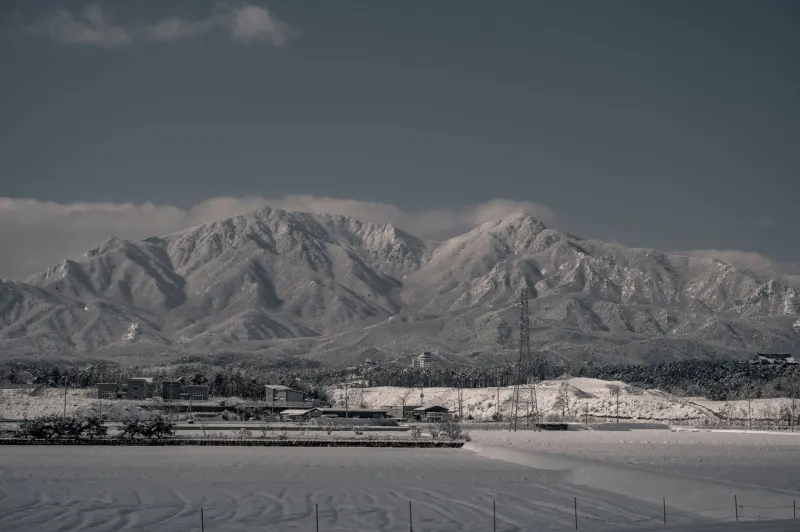
The last bus to Shin-Hotaka runs at 6:47 in the evening. After that, the valley goes quiet in a way that Americans raised on 24-hour convenience stores and always-on connectivity tend to find either profoundly restorative or mildly terrifying, depending on the week.
For a small but growing number of remote workers, former tech employees, and people who've simply had enough, that bus schedule isn't a limitation. It's the point.
The Infrastructure Problem That Became a Selling Point
Rural onsen towns in Japan's mountain regions were not designed for the digital nomad economy. Many of them developed around a single asset — a hot spring — and built just enough infrastructure to serve the visitors who came to use it. A handful of ryokan. A few small restaurants. A bathhouse or two, some of them public, some attached to accommodations. A post office. A bus stop.
What they conspicuously lack is everything the modern knowledge worker is supposed to need: coworking spaces, reliable high-speed internet, specialty coffee, English-language services, a community of other remote workers to network with. By the metrics of digital nomad infrastructure guides, most of these villages score poorly.
That's exactly why some people are choosing them.
"I'd spent two years in Lisbon, Medellín, Chiang Mai," said Derek Paulsen, a freelance UX designer from Portland who spent four months based in a small onsen village in Nagano Prefecture. "All the 'nomad-friendly' cities. They were great. They were also basically the same city with different food. I wanted somewhere that wasn't optimized for me."
What he found instead was a place that had been optimized for something else entirely — for slowness, for the ritual of bathing, for the particular rhythm of mountain life that hasn't changed much in several generations. The internet was patchy. The nearest convenience store was a forty-minute drive. The onsen, however, was exceptional, and it was open from six in the morning until ten at night.
"I started structuring my day around the baths," he said. "Morning soak, work until early afternoon, evening soak. It sounds indulgent but I was more productive than I'd been in years. Something about having a real reason to stop working."
What the Villages Make of This
Japan's rural depopulation crisis is well-documented. Many small towns, including onsen villages, are watching their permanent populations age and shrink, their younger residents drawn to Nagoya, Osaka, Tokyo. The arrival of foreign long-stay visitors — people who rent rooms for months rather than nights, who spend money at local restaurants, who become regulars at the bathhouse — is not unwelcome.
But it's complicated.
Ryokan owners and local residents we spoke with described a genuine warmth toward long-stay foreign visitors, alongside some uncertainty about what this new kind of tourism means for their communities.
"Our guests used to come for three nights, maybe a week," said one innkeeper in the Hida region who asked not to be named. "Now sometimes someone stays for two months. It's good for business. But it's also... different. The village is not a coworking space. It is a place where people live."
The distinction matters. There's a difference between a visitor who chooses a place because they want to inhabit its existing culture and one who chooses it primarily as a backdrop — a place whose lack of connectivity and tourist infrastructure makes it feel authentic without requiring them to actually engage with what that authenticity consists of.
The most successful long-stay visitors, locals suggested, are the ones who learn to participate. Who pick up enough Japanese to have basic exchanges at the bathhouse. Who shop at the local grocery rather than driving to a city for familiar foods. Who become, in a limited but genuine way, part of the daily life of the place.
The Isolation Curve
Almost everyone we spoke with who'd done an extended stay in a rural onsen village described a similar emotional arc.
The first week or two felt like relief — a physical, almost cellular unwinding from the pace of American professional life. The absence of notifications, social obligations, and the ambient noise of being always reachable created a stillness that most described as initially shocking and then deeply pleasant.
Around week three or four, something shifted.
"The silence starts to have weight," said Amara Douglas, a former product lead from Seattle who spent six weeks in a mountain onsen town after leaving her job. "It's not bad weight necessarily. But you start to actually feel things you'd been running from. The onsen helps with that — there's something about the water that makes it easier to sit with discomfort — but it doesn't make it not happen."
This is the part that doesn't make it into the Instagram posts: the stretch where the escape becomes something more demanding. Where the absence of distraction means you're alone with whatever you came there carrying.
Several people described this phase as the most valuable part of their stay, in retrospect. A few described it as the reason they left earlier than planned.
Escapism or Engagement?
The question of whether this trend represents authentic cultural tourism or a newer, more sophisticated form of escapism doesn't have a clean answer.
It can be both, sometimes within the same stay. A person can arrive in a Japanese mountain village primarily to flee their life and leave having genuinely engaged with a culture, a community, and a set of practices that change the way they understand rest, time, and the body. The motivation doesn't necessarily determine the outcome.
What seems to matter more is willingness — to be uncomfortable, to be a guest rather than a consumer, to let the place be what it is rather than what you need it to be.
"The village didn't fix me," Derek said. "But it stopped me long enough that I could figure out what needed fixing. That's different. That's actually more useful."
He's going back in the spring. He's already looked up the bus schedule.
The last one still leaves at 6:47.