When to Go, Where to Soak: A Season-by-Season Guide to Experiencing Japanese Hot Springs the Way Locals Actually Do
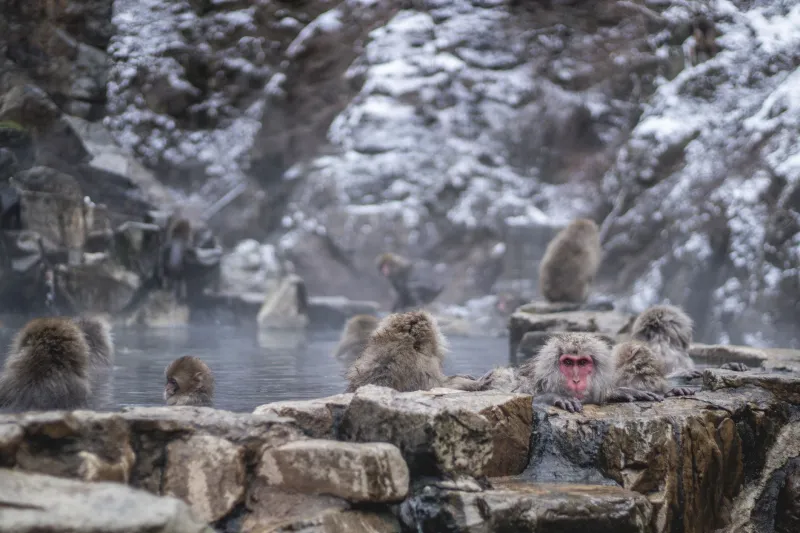
Ask a Japanese grandmother when to visit an onsen and she won't give you a single answer. She'll ask you what you're looking for. Silence? Snow? Leaves turning red over a cedar-framed pool? Each season answers a different question. Each season heals something different.
For American travelers used to thinking about Japan in terms of cherry blossom season (spring) or ski season (winter), this might require a small recalibration. Japan's onsen culture doesn't have an off-season. It has four completely distinct personalities. Knowing which one matches what you need — not just what looks best on Instagram — is the difference between a trip you forget and one you carry home in your bones.
Let's go through the year.
Spring: Steam Rising Through Cherry Blossoms
Best for: First-timers, couples, travelers who want beauty without extreme conditions
Regions to consider: Gero Onsen (Gifu), Kinosaki Onsen (Hyogo), Hakone (Kanagawa)
Spring is when Japan is most recognizably itself to the Western imagination. The cherry blossoms are real, and they are genuinely extraordinary. But spring onsen travel requires a bit of strategy, because the most famous blossom-viewing spots are also the most crowded.
The trick is to follow the sakura front north and west. While Tokyo and Kyoto are packed in late March and early April, mountain onsen towns at higher elevations bloom two to three weeks later. This means you can catch peak blossoms in relative quiet if you time your arrival in mid-to-late April in places like Gero or the Hida region around Hirayu.
The water in spring feels particularly welcoming. After winter's intense mineral soaks, spring baths carry a quality that Japanese bathers describe as nurui — gently warm, soft, almost enveloping. Sodium bicarbonate springs, common in this region, leave skin feeling silky in a way that feels almost unreal.
One practical note: spring is also Golden Week season (late April through early May), which is Japan's busiest domestic travel period. Avoid this window unless you've booked months in advance. The week before Golden Week is often beautiful and manageable.
Summer: The Counterintuitive Season
Best for: Hikers, outdoor adventurers, travelers who want the mountains to themselves
Regions to consider: Nyuto Onsen (Akita), Sukayu Onsen (Aomori), Nozawa Onsen (Nagano, off-ski-season)
Here's the secret most travel guides don't tell you: summer is one of the best times to visit mountain onsen towns, precisely because most tourists avoid them.
The logic that "hot springs in summer" sounds miserable is understandable but wrong. Japan's alpine onsen regions sit at elevations where summer temperatures are mild — often in the low 70s Fahrenheit — and the surrounding forests are at their deepest green. The contrast between the cool mountain air and the hot mineral water is one of the most physically satisfying sensations imaginable.
Summer is also when rotenburo — outdoor baths — reach their absolute peak. Soaking under a canopy of cedar and maple while cool air moves across your shoulders and steam rises around you is a specific kind of perfect that has no real American equivalent. It's somewhere between a cold plunge, a sauna, and a forest bath, all at once.
Nyuto Onsen in Akita Prefecture is particularly worth the journey in summer. Seven small bathhouses scattered through a beech forest, many with milky white sulfur water that stains the wooden tubs a beautiful amber over time. In July and August, you may have entire pools to yourself on a weekday morning.
Autumn: The Season That Converts People
Best for: Everyone. Seriously.
Regions to consider: Hirayu Onsen (Gifu), Yufuin (Oita), Osawa Onsen (Iwate), Kusatsu Onsen (Gunma)
If you ask veteran onsen travelers which season changed them, most will say autumn without hesitation. Koyo — the turning of the leaves — is Japan's other famous seasonal spectacle, and unlike cherry blossoms, it lasts longer, spreads across a wider elevation range, and pairs with onsen in a way that feels almost cosmically designed.
The visual: crimson maples and golden ginkgos reflected in a steaming outdoor pool, mist rising in the cool morning air, the occasional leaf drifting down onto the water's surface. It's not subtle. But it earns every cliché.
What's less discussed is how autumn affects the water itself. Mineral-rich springs — particularly the iron-bearing tessen waters common in the Gifu highlands — seem to hit differently in cooler air. The heat penetrates more deeply. The contrast between the chill outside the bath and the warmth within it sharpens your awareness of your own body in a way that's almost meditative.
Hirayu Onsen, tucked into the Northern Japan Alps at around 4,300 feet elevation, typically sees peak foliage in mid-to-late October. The crowds are present but manageable if you arrive on a weekday. Staying at a small ryokan (traditional inn) rather than a larger hotel means access to private or semi-private baths where you can watch the colors change from the water.
Autumn is also when many regional onsen festivals take place. Bathing culture in Japan has deep Shinto roots, and harvest-season celebrations at bathhouse shrines are worth seeking out. They're rarely on tourist itineraries, which is exactly why they're worth finding.
Winter: The Deepest Soak
Best for: Serious wellness seekers, repeat visitors, anyone who wants to understand what onsen culture is really about
Regions to consider: Nozawa Onsen (Nagano), Zao Onsen (Yamagata), Noboribetsu (Hokkaido), Hirayu Onsen (Gifu)
Nothing prepares you for your first yukimi onsen — a snow-viewing bath.
The temperature outside is below freezing. You've walked through a wooden gate into a courtyard where snow is falling in thick, silent curtains. You lower yourself into water that's 104 degrees Fahrenheit and feel the heat rise up through your chest while snowflakes land on your face and dissolve. Time does something unusual. It slows down in a way that isn't metaphorical.
Winter is when onsen culture reveals its deepest purpose. In Japan's snow country — the mountain regions of Tohoku, the Japan Alps, and Hokkaido — hot spring bathing was never a luxury. It was survival infrastructure. The yu (hot water) kept communities alive through winters that buried entire villages. That history is present in winter onsen in a way it simply isn't in other seasons. You feel it.
Sulfur springs, which tend to run hotter and more intensely mineral, are particularly well-suited to winter soaking. Kusatsu Onsen in Gunma Prefecture, one of Japan's most celebrated bath towns, is at its most powerful in January and February. The acidic sulfur water there is strong enough that soaking time is traditionally limited — a ritual in itself.
For first-timers, Nozawa Onsen in Nagano is a gentler introduction to winter bathing. The town has 13 public sotoyu (outdoor communal baths) that are free to use, fed by different springs with different temperatures and mineral profiles. Wandering between them in a yukata robe through snow-covered lanes, stopping at each one for ten or fifteen minutes, is the closest thing to a walking meditation most Americans will ever encounter.
One Last Thing
Whatever season you choose, try to resist the urge to optimize. The best onsen visit isn't the one with the most baths checked off a list. It's the one where you stopped thinking about the next thing long enough to actually feel the water you were already in.
Japan's hot springs have been doing this work — healing, restoring, returning people to themselves — for centuries. The season is just the door. Walk through it slowly.