Six Months, No Return Ticket: What Happens When Americans Trade Their Careers for Hot Springs and Slow Days in Japan
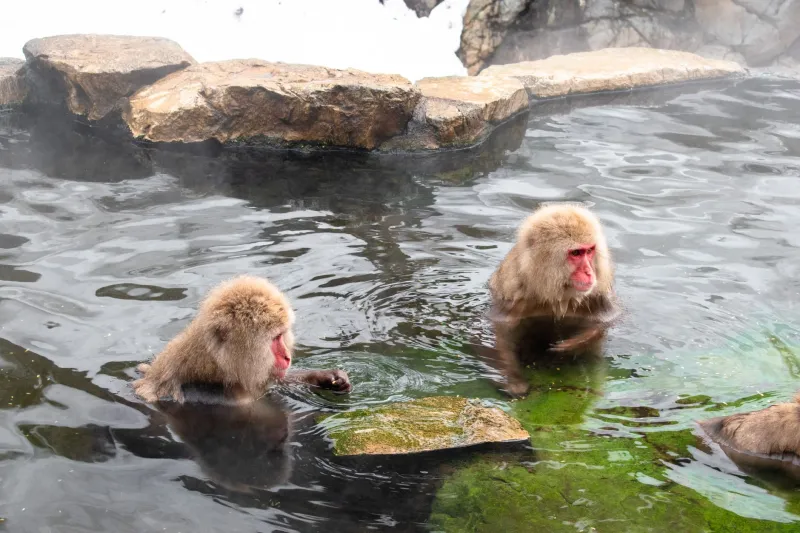
There's a particular kind of clarity that arrives somewhere around day four in an onsen town. The noise in your head — the Slack notifications, the quarterly reviews, the ambient hum of American hustle — starts to dissolve. You've soaked twice today. You ate a meal that took forty minutes to finish and felt zero guilt about it. You have nowhere to be.
For a lot of Americans, that feeling is the beginning of something they didn't plan for.
"I booked two weeks," says Marcus Delaney, a 38-year-old former product manager from Austin, Texas, who first visited Hirayu Onsen in the Okuhida highlands three years ago. "I extended to a month. Then I went home, handed in my notice, and came back for five months." He laughs a little when he says it, like he still can't quite explain the logic. "I couldn't tell you exactly when the decision happened. But I knew the life I was going back to wasn't the one I wanted anymore."
Marcus isn't an outlier. Across Japan's onsen regions — from the mountain villages of Gifu Prefecture to the volcanic landscapes of Hokkaido — a quiet but noticeable wave of Americans is extending their trips from weeks into months, turning what started as a vacation into something closer to a life reset.
The Ritual That Changes Things
It would be easy to chalk this up to pandemic-era restlessness or the remote work revolution, and those factors are real. But the people who stay longer will tell you it's something more specific — it's the onsen itself.
Japanese bathing culture isn't about hygiene. It's not a spa treatment or a wellness hack. It's a daily ritual with its own unhurried logic: you wash completely before you enter, you sit with the water and with yourself, you let time move at the temperature of the bath. You do this in the morning and sometimes again at night. After a few weeks, the structure of it starts to shape your whole day differently.
"I started noticing that I was making decisions more slowly, and they were better decisions," says Priya Mehta, a 44-year-old architect from Chicago who spent four months working remotely from a guesthouse near Shirahone Onsen. "In the US, I was addicted to speed. Japan taught me that deliberate is not the same as slow."
This shift in tempo — what the Japanese might gesture at with words like ma (the meaningful pause between things) or yukkuri (take your time, there's no rush) — turns out to be genuinely disorienting for people raised in American productivity culture. And then, for many, it becomes genuinely appealing.
The Practical Reality of Staying
So what does it actually look like to turn an onsen trip into a months-long stay? The logistics are more manageable than most people assume, though they require some planning.
Visa options for longer stays: US passport holders can enter Japan visa-free for up to 90 days as tourists. For stays beyond that, options include the Cultural Activities visa (suitable for those pursuing language study or traditional arts), the Business Manager visa for entrepreneurs, or — increasingly relevant — Japan's Digital Nomad Visa, officially launched in 2024, which allows remote workers employed outside Japan to stay for up to six months. Requirements include proof of income above roughly $68,000 annually and valid health insurance.
Budget realities: Many long-term visitors are surprised by how affordable onsen town life can be compared to major Japanese cities. Monthly costs in a rural guesthouse or rented machiya (traditional townhouse) can run anywhere from $1,200 to $2,500 depending on location and accommodation style, including meals. Cooking some of your own food, shopping at local markets, and choosing smaller towns over tourist-heavy destinations like Hakone or Beppu can stretch a budget significantly.
"I was spending more on my apartment in Seattle," says Jordan Kessler, a 31-year-old freelance copywriter who spent seven months based out of a village in the Okuhida valley. "And I was eating better, sleeping better, and genuinely enjoying my days. That math felt pretty straightforward."
What 'Success' Looks Like From a Rotenburo
The deeper shift that long-term onsen travelers describe isn't financial — it's philosophical. There's something about soaking outdoors in a rotenburo (open-air bath) with snow on the cedar trees and steam rising off the water that tends to put the American definition of success in a slightly different light.
"I had a good job. I had the apartment, the car, the savings account," says Marcus. "And I was miserable in this very productive way. Japan showed me that you can structure a life around restoration instead of output. That was a genuinely new idea for me."
Not everyone who takes an extended onsen sabbatical quits their career. Many return to their jobs with a recalibrated sense of what they're working for. Some shift to remote or freelance work that gives them the flexibility to return regularly. A smaller number — and they'll be the first to admit they're lucky — find ways to stay indefinitely.
What's consistent across these stories is that the onsen itself acts as a kind of anchor. The daily ritual of soaking gives structure to unstructured time. It's not nothing to do — it's something to do that isn't about producing anything.
How to Plan Your Own Extended Stay
If this is starting to sound less like someone else's story and more like something you want, here's where to start:
- Choose your base wisely. Smaller onsen villages like Hirayu, Fukuchi, or Shin-Hotaka in the Okuhida area offer authentic experiences with lower costs and fewer tourists than more famous destinations. Good internet access varies, so confirm before you commit.
- Start with a month. A two-week trip barely scratches the surface. A month lets you move past the tourist mindset and start actually living somewhere.
- Learn a little Japanese. You don't need fluency, but even basic phrases transform how local people receive you. In smaller towns, the effort is noticed and genuinely appreciated.
- Let the rhythm find you. Don't schedule every day. The whole point is to discover what your time looks like when it isn't optimized for someone else's goals.
The Americans who come to Japan's onsen towns and find themselves staying longer aren't running away from their lives. Most of them would push back hard on that framing. They're running toward something — a different pace, a different set of priorities, a daily practice that asks nothing of them except to be present in warm water.
That turns out to be harder than it sounds. And more valuable than most of them expected.