Hot Water, Bare Souls: What Happens When American Couples Slow Down in a Japanese Onsen
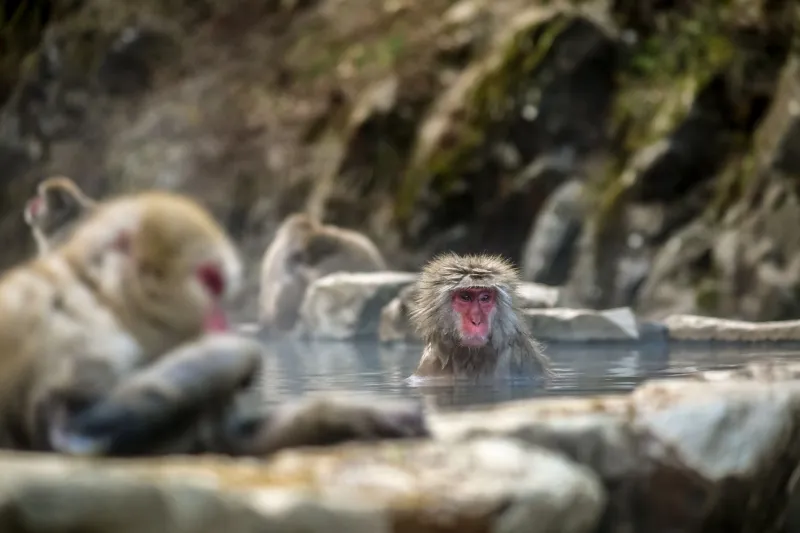
The Moment Everything Got Quiet
Mark and Jennifer had been married eleven years when they booked a trip to Japan mostly because their friends kept going. They'd planned temples, ramen tours, bullet trains. The onsen stop in Hirayu was almost an afterthought — one night, nothing fancy, just a traditional inn with a rotenburo overlooking the mountains.
They didn't expect it to matter. It mattered.
"We hadn't sat together and just... been quiet in years," Jennifer said later. "Not comfortable quiet. At home, silence feels like something's wrong. In the water, it felt like everything was finally right."
Their story isn't unusual. Among American travelers returning from Japan, a specific kind of conversation keeps coming up — about onsen, and about what happened between them there. Not dramatic revelations or tearful reconciliations, necessarily. More like a slow thaw. A remembered closeness.
So what's actually going on?
What Warm Water Does to Your Brain (and Your Relationship)
The physiological case for onsen isn't wellness hype. Immersion in warm water — particularly the 104°F range common in Japanese hot springs — activates the parasympathetic nervous system, the branch responsible for rest and recovery. Cortisol levels drop. Heart rate settles. Muscles that have been braced for months of deadlines and school pickups and traffic finally let go.
Dr. Bruce Becker, a researcher who has studied aquatic immersion therapy extensively, has documented how warm water submersion reduces the stress hormone response and promotes feelings of safety and calm. That's relevant for two people trying to connect, because emotional openness is significantly harder when your nervous system is running in fight-or-flight mode — which, let's be honest, describes most of American daily life.
When both people in a relationship are simultaneously relaxed, physiologically, something shifts. Conversations that would feel loaded at a restaurant dinner table become lighter in the water. Silences that feel awkward on a couch feel easy in a pool surrounded by cedar and mountain air.
Mindfulness researchers call this "environmental priming" — the idea that physical surroundings shape our psychological state before we've consciously decided anything. Onsen environments are almost engineered for it: no screens, no noise, no agenda, natural materials, steam, and the sound of water.
The Japanese Philosophy Behind the Practice
In Japan, communal bathing has never been purely about hygiene. The concept of hadaka no tsukiai — literally "naked communion" — reflects a cultural belief that when you strip away clothing, you strip away social rank, performance, and pretense. You become, in a very literal sense, just a person.
For couples, this idea carries particular weight. So much of modern partnership happens in roles: provider, parent, manager of the household calendar. The onsen asks you to set all of that down at the door, along with your clothes.
Keiko Matsumoto, who runs a small family-owned ryokan in the Okuhida region near Hirayu, has hosted international couples for over two decades. "I watch people arrive tense," she says. "They are polite but separate, even when they are together. By the second evening in the onsen, something changes. They move differently. They laugh more easily. It happens almost every time."
She attributes it partly to the rhythm of ryokan life itself — the kaiseki dinner eaten slowly, the yukata worn instead of regular clothes, the absence of anything to do except be present. The onsen is the centerpiece, but the whole environment supports it.
Choosing the Right Onsen Experience as a Couple
Not every onsen setup works equally well for couples, and it's worth knowing what you're looking for before you book.
Private baths (kashikiri onsen) are the most accessible starting point for American couples. Many ryokan offer reservable private rotenburo — outdoor baths — where you and your partner bathe together without other guests. This sidesteps any anxiety about public nudity (a common concern for first-timers) while still delivering the full mineral water experience. At Hirayu Onsen, several inns offer private outdoor baths with mountain views that can be reserved by the hour.
Mixed-gender baths (konyoku) do exist at certain traditional onsen, though they've become less common in modern facilities. Where they're available, they offer a genuinely different experience — one that feels more rooted in old Japan. Research ahead of time, as customs and expectations vary by location.
Separate-but-together onsen are perhaps the most authentically Japanese couple experience. Men and women bathe in separate pools, then meet afterward in the communal lounge or over a shared meal. There's something to be said for this rhythm — the individual experience followed by reunion. Many couples describe this as surprisingly intimate, a reminder that partnership includes two separate people who choose to return to each other.
Practical Notes on Etiquette (So You Can Actually Relax)
American anxiety about getting onsen etiquette wrong is real, and it can undermine the whole experience if you let it. A few basics:
Shower thoroughly before entering any bath — this is non-negotiable and deeply important to Japanese bathing culture. Most facilities have shower stations right at the entrance to the bath area. Wash everything, rinse completely.
No swimsuits in traditional onsen. Clothing in the water is generally not permitted and considered unhygienic.
Keep your small towel out of the water — fold it and rest it on your head or set it aside.
Move quietly. Onsen are contemplative spaces. Loud conversation, splashing, and phones are all out of place.
Beyond these basics, most onsen visitors — including Japanese ones — are focused on their own experience and not scrutinizing yours. Give yourself permission to not be perfect at this.
The Takeaway That Lasts Longer Than the Trip
Mark and Jennifer went back to Japan the following year. This time, they built the entire itinerary around onsen towns. They brought a list. They'd done research.
What they were really doing, Jennifer says, was chasing that first quiet. The one that reminded them what it felt like to be two people who genuinely liked each other's company.
"We have date nights at home," she said. "We go to dinner, we talk about the kids, we talk about work. It's fine. But in the onsen, we talked about things we hadn't talked about in years. Dreams. Weird memories. Nothing important. Everything important."
The hot water helped. The minerals helped. The mountain air helped. But mostly, it was the absence of everywhere else to be.
That's the thing onsen does that no date night quite manages: it removes the option of rushing.