The Best Thing You Can Do for Your Kids Is Leave Them for a Night and Soak in a Hot Spring
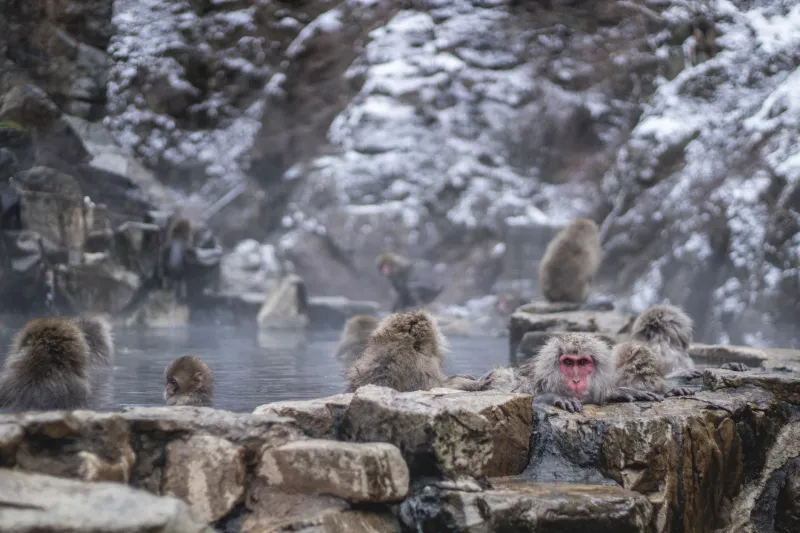
There's a particular flavor of guilt that American parents carry. It doesn't announce itself loudly. It just hums in the background—a low, persistent frequency that kicks up the moment you do something that isn't for your kids, your partner, or your job. You take a bath that lasts longer than eight minutes and you feel it. You book a solo trip and you really feel it.
So imagine what it feels like to fly to Japan, check into a ryokan, and spend three days doing almost nothing but eating, sleeping, and sitting in a steaming mineral pool while someone else handles school pickups.
For a lot of American parents, that scenario sounds less like a vacation and more like a confession.
And yet—something happens in those pools. Something that's harder to explain than you'd think, and more useful than any parenting book you've half-read on your nightstand.
The Guilt Is Real. So Is the Cost of Ignoring It.
Let's not breeze past the guilt part, because it's doing real work on American parents. According to a 2023 survey by the American Psychological Association, parents consistently rank among the most stressed demographic groups in the country. And yet the cultural script we're handed tells us that good parents put themselves last—that depletion is somehow a sign of dedication.
The result? A lot of exhausted, resentful, distracted people trying to be present for their children while running on empty. You're physically in the room but mentally somewhere else, half-managing a mental to-do list, half-responding to a text, and wondering why the connection you want with your kid keeps feeling just slightly out of reach.
That's not a parenting failure. That's a math problem. You cannot give what you don't have.
Onsen culture, it turns out, has known this for centuries.
What Japan Gets That We Don't
In Japan, bathing isn't just personal hygiene. It's a daily ritual of restoration—a culturally sanctioned pause that doesn't require justification. Nobody at an onsen is explaining why they deserve to be there. Nobody is checking their phone between soaks to prove they're still useful. The bath is the point. The stillness is the point.
This isn't selfishness. It's maintenance.
Japanese parents—and grandparents, and salarymen, and teenagers—treat the onsen as part of the rhythm of life rather than a reward for surviving it. You don't earn the bath. You take it because you're a person who needs to be replenished, and replenished people function better in every role they occupy.
For American parents visiting places like Hirayu Onsen, nestled deep in the Japanese Alps of Gifu Prefecture, this reframing can feel almost radical. The hot springs here are fed by mineral-rich geothermal water that's been drawing travelers for over four hundred years. The setting—mountain air, cedar architecture, the sound of water over stone—strips away the noise that makes it so hard to just be anywhere back home.
And in that quiet, something loosens.
What Parents Actually Report Coming Home With
Talk to American parents who've done a solo or couples trip to an onsen town, and a pattern emerges. It's not that they came home enlightened or transformed in some dramatic, Instagram-worthy way. It's quieter than that.
They came home with patience they didn't know they were missing.
One mom from Portland described it this way: she'd been snapping at her kids over small things for months—homework left undone, socks on the floor, the usual. After four days at a ryokan in the Japanese Alps, she came back and noticed that those things just... didn't land the same way. Not because the kids had changed. Because she had more space inside herself to absorb the friction without it becoming a confrontation.
A dad from Chicago said something similar. He'd been physically present with his daughter for years but privately admitted he was rarely actually there. His mind was always somewhere else. After a week of enforced slowness in Japan—no agenda, no deliverables, just meals and baths and long walks—he came home and found himself genuinely curious about her day. Not performing interest. Actually having it.
This is what restored people look like in relationship with their families.
The Paradox, Unpacked
Here's the thing about the onsen paradox: it only sounds like a contradiction until you sit with it.
Leaving to restore yourself is not the opposite of being a good parent. In many cases, it's the precondition for it. The parent who returns from a few days of genuine rest—who has slept without an ear tuned for nighttime sounds, who has eaten without cutting anyone else's food first, who has had a thought that lasted longer than thirty seconds—that parent has something real to offer.
Presence isn't just proximity. It's the quality of your attention. And attention is a resource. It runs out. It needs refilling.
Onsen culture refills it in a way that's hard to replicate at home, partly because the environment is so different—the heat, the minerals, the silence, the absence of your usual context—and partly because Japan gives you cultural permission to stop. There's no American equivalent of that permission. We don't have a shared ritual that says: this is the part where you rest, and it is not optional, and you will not be judged for it.
Bringing the Lesson Home Without the Plane Ticket
You don't have to fly to Gifu Prefecture every time you're running low—though if you can, you absolutely should. But the lesson onsen culture teaches is portable, even if the experience isn't.
It starts with taking the guilt seriously enough to argue with it. When you feel that hum of self-reproach for wanting time that's just yours, ask what it's actually protecting. Usually it's protecting a story about what good parents look like—a story that, on closer inspection, doesn't hold up.
It continues with treating restoration as a non-negotiable rather than a luxury. A bath that lasts twenty minutes instead of five. A morning walk without your phone. A weekend away, when you can make it happen. Not as a reward. As infrastructure.
And it ends—if there's an end—with the recognition that your kids don't just need you present. They need you well. They need to see what it looks like when an adult takes care of themselves without apology, because someday they'll need to know how to do that too.
The onsen teaches that by example. So can you.
One More Thing the Hot Springs Get Right
There's a concept in Japanese culture called ma—the meaningful pause, the intentional space between things. It shows up in music, in architecture, in conversation. It's the idea that what you don't fill is just as important as what you do.
American parenting doesn't leave much ma. The calendar is full, the notifications are on, the guilt ensures you never fully stop.
But somewhere in the mountains of central Japan, sitting in water that's been warming travelers since the Edo period, you get a taste of what it feels like to let the space exist. To let yourself be empty for a little while so you can be full again.
Your kids will notice the difference. They always do.