Soaking Won't Fix Everything — But Here's What It Actually Can Do
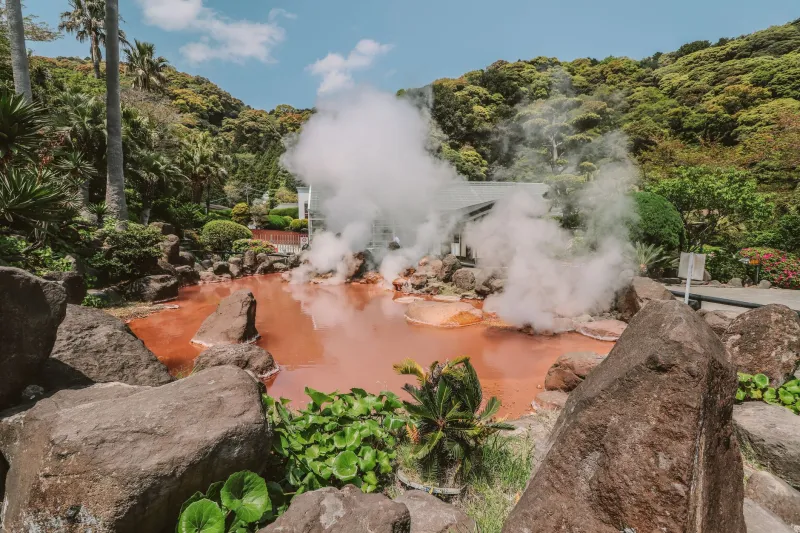
There's a particular kind of American who arrives at an onsen with a list. Not a packing list — an emotional one. They're carrying burnout, a breakup, a diagnosis, or just a years-long accumulation of days that felt too loud and too fast. They've read something online about the healing power of Japanese hot springs, maybe watched a documentary, maybe just followed a rabbit hole of ryokan photos at 11pm on a Tuesday. And they've arrived, quietly, desperately hoping the water will fix them.
Sometimes it helps. Sometimes it helps a lot. And sometimes it doesn't do what they came for — and nobody told them that ahead of time.
This is that article.
What the Research Actually Says
Balneotherapy — the formal term for therapeutic bathing — has a longer scientific track record than most Americans realize. Japanese researchers have been studying onsen's physiological effects for decades, and the findings are genuinely interesting. Regular immersion in mineral-rich hot spring water has been associated with reduced cortisol levels, improved sleep quality, lowered blood pressure, and measurable relief from certain musculoskeletal conditions like chronic lower back pain and mild arthritis.
The minerals matter here. Sulfur-rich springs, common in volcanic regions like the Japanese Alps around Hirayu, have demonstrated antibacterial and anti-inflammatory properties on the skin. Sodium bicarbonate springs — sometimes called "beauty waters" — soften the skin in ways that aren't just marketing copy. These are real, documented effects.
Beyond the mineral science, there's the heat itself. Soaking in water between 104°F and 108°F triggers vasodilation, increases circulation, and activates the parasympathetic nervous system — the part of you that's responsible for rest and recovery. Your heart rate slows. Your muscles release tension they've been holding since your last deadline. Your breathing deepens without you trying.
For stress, mild anxiety, and physical fatigue? Onsen is genuinely, legitimately useful. Not metaphorically useful. Actually useful.
Where the Wellness Hype Runs Ahead of Reality
Here's where things get complicated.
Onsen culture has been absorbed into the global wellness industry, and the global wellness industry has a well-documented habit of overpromising. Somewhere between the legitimate science and the Instagram captions, hot springs got repositioned as a cure-all — a place where trauma dissolves, depression lifts, and grief gets washed away like so much mineral sediment.
That's not what happens. That's not what onsen is.
Miyuki Tanaka, a bath therapist at a traditional ryokan in the Okuhida region, puts it plainly: "Onsen can quiet the noise around a problem. It cannot solve the problem itself. We have always known this. The confusion comes from outside."
She's describing something Japanese onsen culture has understood intuitively for centuries — the bath is a reset, not a resolution. It creates conditions for clarity, not clarity itself. The distinction is subtle but significant.
Americans, in particular, tend to approach wellness destinations with a transactional mindset. We want ROI on our retreat. We want to arrive broken and leave repaired. Onsen doesn't work that way, and expecting it to can actually make the experience worse — because when the water doesn't fix the thing you needed fixed, you feel cheated by something that was never making that promise in the first place.
The Visitors Who Found What They Were Looking For
That said — and this matters — some people do find something real here.
Derek, a 44-year-old software architect from Portland, came to Japan six months after his father died. He wasn't in therapy. He wasn't sure he believed in therapy. He'd heard that Japanese culture had a different relationship with stillness and decided, on something like instinct, to try it.
"I didn't have a breakthrough in the water," he says. "Nothing cinematic happened. But I noticed that for the first time in months, I wasn't trying to outrun anything. You can't scroll in a rotenburo. You can't multitask. You're just... there. And being there — just being somewhere without escape — that was actually what I needed."
What Derek is describing isn't therapy. But it isn't nothing, either. Forced presence, sensory grounding, removal from the environments that reinforce anxious patterns — these are real psychological mechanisms. They're also, not coincidentally, things that good therapists try to teach their clients in clinical settings.
Sarah, a 38-year-old teacher from Atlanta who came to Japan specifically to address what she called "a complete nervous system collapse" after three years of pandemic teaching, had a different experience. She arrived expecting the water to carry something away. It didn't.
"I cried in the bath on the third day," she says. "Not in a healing way. In a 'this isn't enough' way. I needed more than this. I needed to talk to someone." She found a therapist when she got home. The onsen trip, she now says, did help — but only in retrospect, and only because she eventually got the actual support she needed alongside it.
The Honest Case for Onsen as a Complement
Here's what the evidence — both scientific and anecdotal — actually supports:
Onsen works best as part of something larger. It's an extraordinary tool for nervous system regulation, for creating space between stimulus and response, for giving your body a physiological break from chronic stress. For people managing mild-to-moderate anxiety, physical tension, sleep disruption, or garden-variety emotional exhaustion, regular soaking can be a meaningful part of a wellness practice.
For people navigating clinical depression, unprocessed trauma, grief that's become complicated, or any condition that genuinely requires professional intervention — onsen is not a substitute. It can be a beautiful, supportive complement. It can be the place where you feel human again for an hour. But the water isn't a therapist, and expecting it to be one is setting yourself up for a particular kind of disappointment.
The Japanese concept of tooji — therapeutic hot spring stays of several weeks, historically prescribed for specific conditions — actually built this understanding in from the start. Traditional tooji wasn't a vacation; it was structured, intentional, and often supervised. The healing was in the consistency and context, not in a single soak.
What to Actually Expect When You Come
If you're coming to a place like Hirayu with something heavy in your chest, here's the honest version of what you might find:
The water will slow you down. That's real. The minerals will do something noticeable to your skin and your muscles. Also real. The enforced quiet of a traditional onsen — no phones, no performance, no clothes — creates a kind of social leveling that many Americans find unexpectedly moving. You'll probably sleep better than you have in months.
You might cry. You might feel, briefly, like everything is fine. You might feel a sudden, inexplicable gratitude for being alive and warm and somewhere beautiful.
And then you'll go home. And the thing you came with will still be there, maybe a little quieter, maybe a little more manageable. Maybe with a clearer sense of what you actually need next.
That's not nothing. In fact, for a lot of people, that's exactly enough.
Just go in knowing what you're asking the water to carry — and what you'll need to carry yourself.