Still Water, Still Mind: Why Americans Are Finding More Meaning in an Onsen Than on a Meditation App
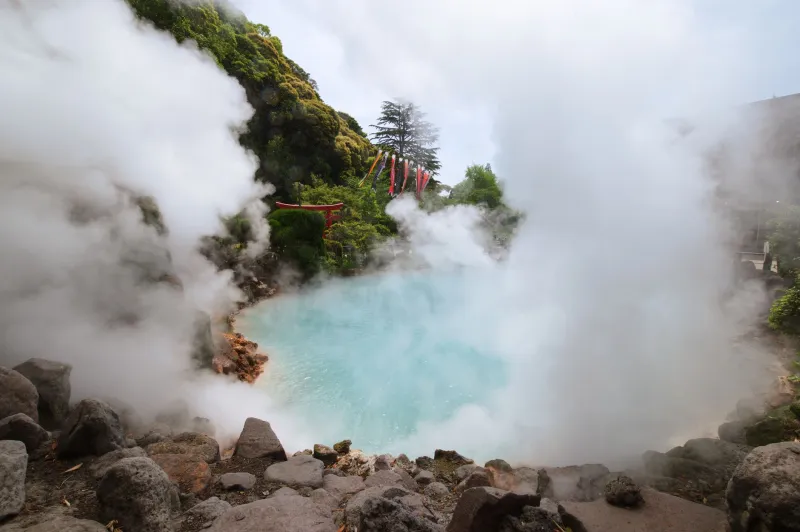
Somewhere between the third and fourth minute of sitting in the outdoor bath at a small ryokan outside Hirayu, something shifts. You stop cataloging your thoughts. You stop planning tomorrow's itinerary. The mineral-heavy water presses against your chest like a gentle hand, and the sound of the river below — always the river — becomes the only thing happening in the world.
No one told you to feel this way. There's no instructor, no app, no curated playlist. It just happens.
For a meaningful and growing slice of American travelers, that moment — unrehearsed, unbranded, and completely free — is exactly what they came for. Not the scenery, not the ryokan dinner, not even the famous skin-softening sulfur water. They came because soaking in a Japanese onsen has become, quietly and without any marketing fanfare, one of the most genuinely contemplative practices they've ever encountered.
The Wellness Industry Didn't Sell You This One
America is not short on spiritual offerings. Meditation retreats in Sedona. Sound baths in Brooklyn. Breathwork weekends in the Berkshires. There's a supplement for your cortisol and a podcast for your existential dread. The wellness industry has become extraordinarily good at packaging the feeling of peace and selling it back to you at a premium.
Onsen culture doesn't do that. It doesn't need to.
The practice itself is ancient — some Japanese bathing traditions stretch back over a thousand years — and it arrives without a syllabus. You undress. You rinse. You enter the water. That's it. There's no performance required, no pose to hold, no journaling prompt waiting for you at the end. The water does what it does, and you let it.
For Americans accustomed to optimizing every experience, that absence of structure is initially disorienting. And then, for many, it becomes the entire point.
Coming Back to the Same Water
Ask anyone who's made the trip to a place like Hirayu Onsen more than once, and a pattern emerges. The first visit is about discovery — the novelty of the ritual, the strangeness of communal bathing, the surprise of how good it feels. The second visit is something else entirely.
"The first time, I was figuring out the rules," says one traveler from Portland who has returned to the same onsen town three times in five years. "The second time, I actually arrived. I knew where to sit, I knew what the water felt like when it was just right, and I stopped trying to document everything. I just... soaked."
That shift — from tourist to pilgrim — is something Japanese culture has long understood. The concept of returning to a sacred or restorative place isn't about nostalgia. It's about deepening. Each return strips away another layer of distraction, until what remains is something closer to presence than anything a weekend retreat ever managed to produce.
Several travelers describe choosing their onsen the way others might choose a therapist — with intention, over time, building a relationship with a specific place and its particular water. Some return annually. Some plan trips around the same bath they visited years earlier, curious to see how both the water and themselves have changed.
What Hot Water Actually Does to a Busy Mind
There's real physiology behind the feeling. Immersion in hot water raises core body temperature, dilates blood vessels, and triggers the parasympathetic nervous system — the branch responsible for rest and recovery. Heart rate slows. Muscles release tension they've been holding for weeks without you even noticing. The body, in short, stops bracing.
But the spiritual dimension that so many visitors describe isn't just physiological. It's also about the enforced simplicity of the experience. You cannot scroll. You cannot multitask. You cannot, in any meaningful way, be productive. The onsen removes every available escape route from the present moment, and what's left is just you — your actual, unedited self — sitting in hot water with nowhere else to be.
For Americans who spend enormous energy trying to achieve presence through effort — through apps, through classes, through carefully curated routines — the discovery that presence can arrive without trying at all is quietly revolutionary.
"I've done meditation retreats. I've done yoga teacher training. I've tried everything," says a traveler from Austin who visited the Japanese Alps last spring. "And then I sat in an outdoor bath in the snow for forty minutes and felt more still than I had in years. I didn't do anything. That was the whole lesson."
The Permission You Didn't Know You Needed
There's a cultural guilt embedded in American ideas of rest. Stillness has to be earned. Relaxation needs to be productive. Even vacation is often reframed as self-improvement — a chance to become a better, more interesting, more refreshed version of yourself.
Onsen culture gently dismantles that logic. In Japan, bathing has never been something you do to become better. It's simply something you do. It is, in itself, enough.
That reframe lands differently for different people. Some describe it as relief. Others describe it as grief — a recognition of how much energy they've spent justifying their own need for rest. Either way, the water seems to hold space for both.
The spiritual quality of an onsen isn't supernatural. It's structural. The ritual creates conditions for something Americans rarely give themselves: unscheduled, unmonitored, unpurposeful time. Time that doesn't have to produce anything. Time that is allowed to simply pass.
Why Hirayu Keeps Calling People Back
Nestled in the Okuhida valley of the Japanese Alps, Hirayu Onsen has a particular quality that travelers struggle to articulate but consistently mention. It's the scale, partly — small enough to feel like a real place rather than a resort destination. It's the water, which runs naturally from volcanic springs and carries that faint mineral warmth that feels less like a spa treatment and more like the earth itself offering something.
And it's the surrounding landscape: forested mountains, cold air, the sound of water moving somewhere beneath you. The kind of environment that makes silence feel inhabited rather than empty.
For those drawn to onsen as a spiritual practice, Hirayu tends to reward return visits. The town doesn't change much. The water doesn't change at all. What changes is you — the willingness to arrive without an agenda, to let the soak be the destination rather than a stop along the way.
You Don't Have to Call It Spiritual
Not everyone who finds meaning in an onsen wants to frame it in spiritual terms, and that's fine. You don't need a vocabulary for it. You don't need to post about it, integrate it into a practice, or recommend it to anyone.
You can simply sit in hot water and let your mind go quiet.
In a world that has turned stillness into a product and silence into a subscription service, that might be the most radical thing you do all year.