The One Place Americans Actually Stop Scrolling (And It's Not a Wellness Retreat)
Nobody Told You to Put It Down. You Just Did.
Think about the last time you genuinely forgot about your phone. Not a digital detox you scheduled. Not a meditation retreat where someone collected your device at the door. Just... forgot. Chances are, it's been a while.
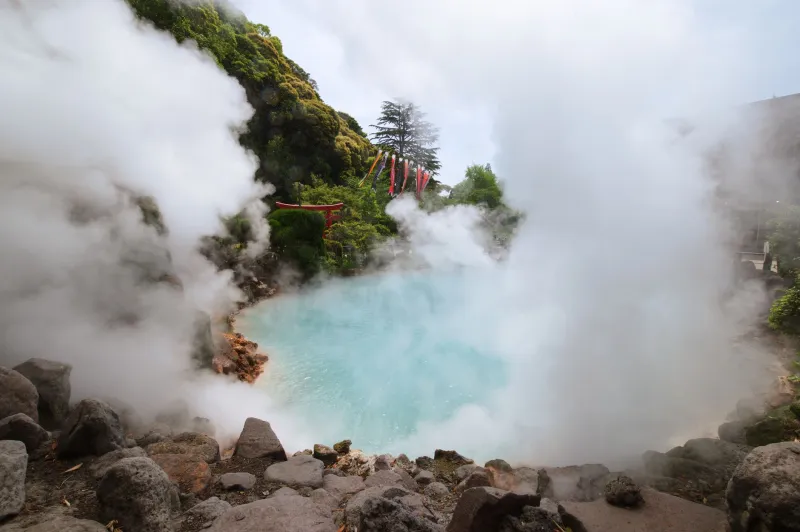
Now imagine stepping into a cedar-lined bathhouse in the Japanese Alps, lowering yourself into water that smells faintly of sulfur and minerals, and realizing — somewhere around the third minute — that you haven't thought about your notifications once. Nobody asked you to disconnect. The water just made everything else seem very, very far away.
This is the onsen paradox. In a country that invented the bullet train, the vending machine that sells everything, and some of the world's most sophisticated consumer technology, people voluntarily sit in hot water and do absolutely nothing for extended periods of time. And Americans who visit — people who check their phones an average of 96 times a day, according to research from Asurion — somehow find themselves doing the same.
The question worth asking isn't just why does this happen in Japan. It's why can't we make it happen anywhere else?
Water Has Always Been Different
There's something physiologically disarming about immersing your body in hot water. Your heart rate slows. Cortisol drops. The parasympathetic nervous system — the one responsible for rest and digestion, not fight-or-flight — starts running the show. This is basic biology, and it happens in a bathtub in Cleveland just as much as it does in Hirayu.
But the onsen experience layers something else on top of that biology: an entire cultural architecture designed to make stillness feel natural rather than effortful.
In most American wellness spaces, the absence of phones is enforced. Yoga studios post signs. Spa staff remind you at check-in. The rule exists because the default assumption is that you'll reach for the device unless someone stops you. The effort required to not use your phone gets transferred from you to the institution.
In a Japanese onsen, the setup is different. Your phone — along with your clothes, your watch, your wallet, and every other object that defines your social identity — is locked in a small wooden box in the changing room. You walk into the bath carrying nothing. The absence isn't a restriction. It's just the logical result of the environment.
There's no willpower involved. The architecture did the work.
The Social Layer Nobody Talks About
Here's what gets overlooked in most onsen conversations: you're not alone in there.
In an American context, we tend to associate phone-free time with solitude — hiking alone, reading in a quiet room, meditating with your eyes closed. Disconnection, in our mental model, is a private act.
The onsen flips that. You're sitting in communal water with strangers, all of you equally unclothed, equally phone-free, equally without the social props that normally structure interaction. And rather than making the situation awkward, it tends to produce something unexpectedly easy. A quiet nod. A short conversation about the water temperature. An old man who doesn't speak English and you who don't speak Japanese, both just sitting there, not needing to fill the silence.
Psychologists call this "social nudging" — when the behavior of people around us quietly calibrates our own. When everyone in the room is still, stillness becomes the default. When nobody is performing for an audience, the impulse to perform evaporates. Your nervous system picks up on the collective calm and follows it somewhere you didn't plan to go.
This is part of why American visitors to onsen towns like Hirayu consistently report that the disconnection felt easy — not like something they achieved, but something that simply happened to them. The social environment made phone use feel not just unnecessary, but genuinely strange. Like checking email at a funeral. The context made the choice for you.
Sensory Saturation as a Design Principle
There's also something to be said for what onsen gives your senses to do instead.
The steam. The mineral smell — somewhere between warm stone and something older, earthier. The specific weight of water that's hotter than you expected. The sound of it moving. The view, if you're lucky enough to be in a rotenburo, an outdoor bath, where the water meets open sky and whatever season is happening beyond the cedar fence.
Your phone, at its core, is a sensory delivery device. It gives your eyes and your hands something to do when the environment around you isn't doing enough. Strip away the phone and put nothing in its place, and most Americans will last about forty-five seconds before the anxiety kicks in.
But strip away the phone and replace it with an environment that's genuinely absorbing — water, steam, stone, sky, the specific quiet of mountains — and the craving dissolves before it has a chance to form. You're not white-knuckling your way through disconnection. You're just... occupied. By something real.
Designers of American wellness spaces spend enormous resources trying to engineer this effect. Onsen culture stumbled into it centuries ago and never had to think about it.
What This Reveals About the Life We've Built
The onsen paradox tells us something uncomfortable: we don't reach for our phones because we love them. We reach for them because we've designed our environments to make that the path of least resistance at every moment.
Open-plan offices. Waiting rooms with no windows. Dinner tables where everyone is slightly bored. We've built a world full of sensory gaps, and we've handed ourselves a device perfectly engineered to fill every single one. The phone isn't the problem. The emptiness is.
What Japan's onsen culture offers — and what travelers carry home with them, sometimes without realizing it — is a proof of concept. That it's possible to build environments where stillness is the easy choice. Where the body's natural inclination toward rest isn't constantly fighting against the architecture around it.
You don't need to move to Japan to take that lesson seriously. But it helps to have experienced it somewhere, to have felt in your own body what it's like when the environment handles the hard work of slowing down.
So What Do You Do With That?
Most people who visit an onsen for the first time come back changed in ways that are hard to articulate. They're slower, for a few days at least. More likely to sit with a cup of coffee without picking up their phone. More willing to let a conversation breathe.
It doesn't last forever. Life reasserts itself. The notifications pile up. But the memory of that ease stays somewhere in the body — the knowledge that disconnection doesn't have to be a battle, that the right environment can make it feel like the most natural thing in the world.
That's the real souvenir from a week in a place like Hirayu. Not the yukata you bought. Not the photos you took on the way in, before you handed your phone to the locker.
The memory of what it felt like to sit in hot water and want absolutely nothing else.