Hot Springs as Medicine: Why Chronic Pain Sufferers Are Building Their Japan Itineraries Around the Water, Not the Sights
Debra Hollis spent eleven years trying to explain fibromyalgia to people who'd never felt it. The bone-deep fatigue. The way certain fabrics against her skin felt like sandpaper. The mornings when getting out of bed required a full negotiation with her own body. She tried every mainstream treatment her rheumatologist offered — medications, physical therapy, carefully managed sleep schedules — and while she found some relief, she never found a day that felt entirely free.
Then a friend who'd traveled through Japan mentioned, almost offhandedly, that she'd spent three days in a sulfur-spring town in Nagano and come back walking differently. Debra booked her flight four months later.
"I didn't go expecting a miracle," she says. "I went hoping for maybe a Tuesday that hurt a little less than usual. What I got was five days where I actually forgot, for stretches of time, that my body was something I had to manage."
She's not alone. Among the quieter corners of chronic illness communities online — Facebook groups for fibromyalgia warriors, Reddit threads for people with rheumatoid arthritis, forums where people swap notes on what actually helps — Japan's onsen have developed a devoted following that has nothing to do with aesthetics or Instagram feeds. These travelers aren't chasing a beautiful photo of mist rising over a wooden bath. They're chasing the specific, mineral-dense, geothermally heated water that Japanese physicians have been recommending to patients for well over a thousand years.
What's Actually Happening in the Water
Not all hot springs are equal, and this is where the conversation about chronic pain gets genuinely interesting. Japanese onsen are classified by their mineral content — and those classifications aren't just bureaucratic categories. They represent meaningfully different chemical compositions that interact with the human body in different ways.
Sulfur-rich onsen (known as ryuuousen) are among the most studied for pain relief. The sulfur compounds absorbed through the skin can influence circulation and have demonstrated anti-inflammatory effects in research settings. For someone with rheumatoid arthritis, where inflammation is literally the disease mechanism, this isn't a trivial distinction.
Natrium chloride springs — essentially sodium-rich waters — retain heat exceptionally well on the skin after bathing, extending the therapeutic window of warmth well beyond the soak itself. Sodium bicarbonate springs, sometimes called "beauty waters" in Japanese tourism literature, have a pH that softens skin and may reduce surface nerve sensitivity — something fibromyalgia patients, who often experience heightened tactile sensitivity, find genuinely meaningful.
Then there's the heat itself. Hydrotherapy research has consistently shown that sustained immersion in water between 100°F and 108°F reduces muscle spasm, increases blood flow to peripheral tissues, and triggers the release of endorphins. For chronic pain conditions where the nervous system has essentially been stuck in a heightened alert state for years, that physiological reset isn't nothing.
Dr. Yuki Tanaka, a physician at a wellness clinic near Kusatsu Onsen in Gunma Prefecture, has spent two decades observing international visitors with chronic conditions. "The people who come here with rheumatic conditions or fibromyalgia — many of them tell me they feel better within two days," she says. "The combination of mineral absorption, sustained heat, and the slowing down of the nervous system creates conditions that are genuinely therapeutic. We don't oversell it. But we also don't pretend it's only relaxation."
Matching Your Condition to the Right Water
If you're traveling with chronic pain as a primary consideration rather than an afterthought, the destination selection process looks very different from a standard Japan itinerary.
For fibromyalgia, the evidence and traveler testimony points most strongly toward sulfur springs and sodium bicarbonate springs. Kusatsu Onsen in Gunma Prefecture has extremely high sulfur content and a long history as a medicinal destination — it was designated a therapeutic resort by the Japanese government and has been drawing health-focused visitors for centuries. The waters are acidic and intensely mineral; they're not for leisurely lounging so much as purposeful, shorter soaks. Nyuto Onsen in Akita Prefecture offers a range of spring types across its cluster of small ryokan, making it useful for travelers who want to experiment with different mineral profiles across several days.
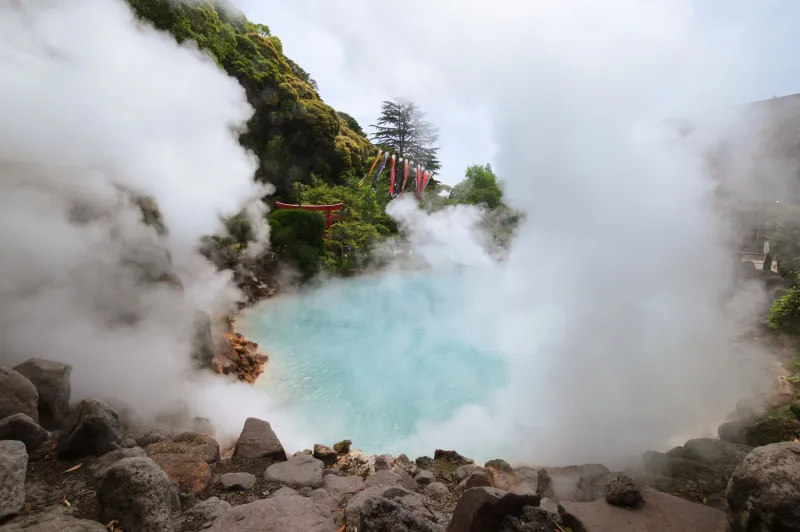
For rheumatoid arthritis and osteoarthritis, the focus shifts toward sodium chloride and calcium sulfate springs, which tend to support circulation and joint mobility. Beppu in Oita Prefecture on Kyushu island is arguably Japan's most famous therapeutic onsen city — it processes more hot spring water than anywhere else in the country and has a long tradition of onsen ryokan that cater specifically to guests with mobility and joint concerns. The town has accessible bathing facilities and staff accustomed to guests who need extra time and care.
For general inflammatory conditions and nerve pain, carbon dioxide-rich springs are worth seeking out. These are less common but produce a distinctive tingling sensation as the gas interacts with skin, and research from European spa medicine — which has studied carbonated mineral baths extensively — suggests measurable improvements in peripheral blood flow.
The Slow Travel Piece Nobody Talks About
Here's something the chronic pain community understands intuitively that healthy tourists sometimes miss: the pacing of a Japan trip matters as much as the destination.
Flying into Tokyo, rushing through three cities in a week, and squeezing in an onsen night as a finale is not the same experience as arriving at a single ryokan, unpacking slowly, eating meals at the pace the kitchen intends, and soaking twice daily for four or five days. For someone managing a pain condition, the second version isn't just more pleasant — it's functionally different in terms of what the body can receive and integrate.
Debra, who has now made two trips to Japan specifically around her fibromyalgia management, structures her itineraries around what she calls "minimum viable tourism." She picks one onsen town, stays put for most of the trip, and treats the soaking schedule the way she'd treat a physical therapy protocol back home: consistently, with intention, and without rushing.
"I had to let go of the idea that I was wasting my trip if I wasn't seeing a new temple every morning," she says. "Once I did that, the trip became something I actually came home from feeling better. Not just rested. Better."
Practical Notes Before You Go
A few things worth knowing if you're planning a pain-focused onsen trip:
Talk to your doctor first. This is not a disclaimer filler — it's genuinely important. Some conditions and medications don't mix well with high-heat immersion. Cardiovascular concerns in particular warrant a conversation before you commit to daily soaking at high temperatures.
Shorter soaks, more frequently, often beat long single sessions. Most traditional Japanese guidance on therapeutic bathing suggests three to five short soaks (ten to fifteen minutes each) spread across a day rather than one extended soak. For people with chronic fatigue components to their condition, this approach also helps prevent the post-soak exhaustion that can come from too much heat at once.
Ask your ryokan staff about spring type. A good ryokan will know exactly what's in their water and will often have staff who can explain the composition clearly. If you're traveling to a town with multiple spring sources, ask which bath is best suited to your specific concern.
Give it more than one day. The most consistent thing reported by chronic pain travelers is that the benefit builds over several days of regular soaking. Day one often feels good. Day three is often when something shifts more noticeably.
Japan's thermal waters have been understood as medicine for longer than Western medicine has existed as a formal discipline. For Americans who've spent years navigating a healthcare system that sometimes struggles to treat pain that doesn't show up cleanly on a scan, there's something quietly profound about arriving in a country where the bath itself has always been considered part of the cure.