How a Week of Doing Nothing in a Japanese Hot Spring Made Me Dangerously Good at My Job
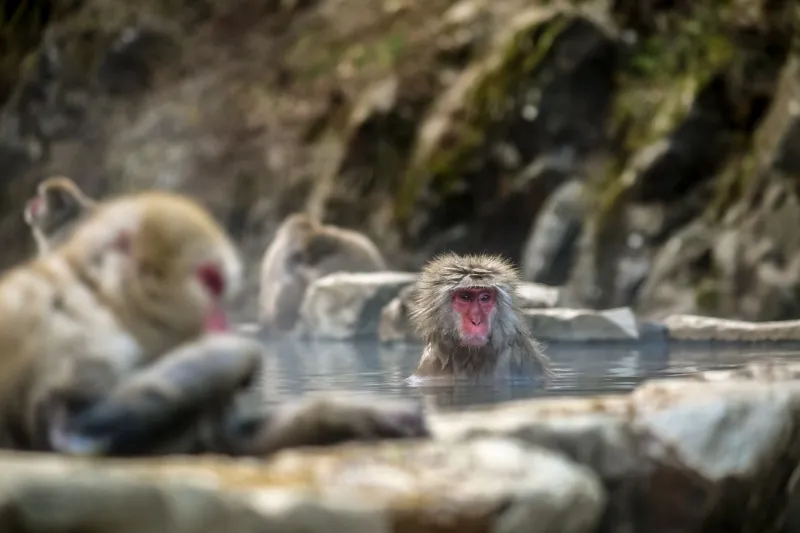
Nobody warns you about the reentry.
You spend a week in a mountain onsen town — no real WiFi signal, no Slack notifications, no back-to-back Zoom calls bleeding into your lunch hour — and then you fly home. You expect to feel behind. You brace for the inbox avalanche, the stack of decisions that piled up while you were soaking in sulfurous water and eating kaiseki dinners at 6pm like a retired professor.
What you don't expect is to feel better at your life than you did before you left.
That's the part nobody puts in the travel brochure. The onsen paradox: the more completely you disconnect in Japan, the more effectively you function when you come back.
The Inbox Will Still Be There. Your Brain Might Not.
Marcos T., a 38-year-old product manager from Austin, describes his first onsen trip as "the most accidentally productive thing I've ever done." He hadn't planned it that way. He booked a week in a small mountain town after burning out spectacularly on a product launch that had consumed eight months of his life.
"I genuinely thought I was just going to sleep and eat ramen," he says. "I didn't have a wellness agenda. I didn't meditate. I just soaked. A lot."
What happened instead surprised him. By day three, he was sketching out a new framework for his team's roadmap process — on paper, in a notebook he'd bought at a konbini because he had nothing else to do. By the time he landed back in Austin, he had six pages of ideas he'd never have had sitting at his standing desk.
"Something about being forced to stop," he says, "made my brain start actually working again."
Neuroscience has a pretty tidy explanation for this, even if it sounds less poetic than Marcos's notebook story. When your brain is in a state of constant low-grade stimulation — the kind produced by always-on work culture, perpetual phone checking, and the ambient hum of digital obligation — it never fully enters what researchers call the default mode network. That's the mental state associated with daydreaming, creative synthesis, and the kind of loose, associative thinking that produces your best ideas. You need genuine stillness to get there. Not a 20-minute meditation app session between meetings. Actual stillness.
An onsen, it turns out, is a remarkably effective delivery mechanism for that.
What the Water Is Actually Doing
There's the obvious physical piece: hot mineral water relaxes muscles, improves circulation, and triggers the parasympathetic nervous system — the one responsible for rest and recovery rather than fight-or-flight. The minerals themselves vary by spring, but many onsen waters contain compounds like magnesium and sulfur that have documented effects on cortisol regulation and sleep quality.
But the less obvious piece is cultural. Japanese onsen etiquette doesn't just discourage phone use — it makes it genuinely impractical. You're unclothed. You're in shared, quiet space governed by a set of unspoken social expectations that discourage loud conversation, let alone business calls. The environment itself is designed, almost architecturally, to make productivity impossible.
And that's precisely why it works.
Jenna M., a therapist from Portland who took her first solo trip to Japan two years ago, puts it this way: "American rest culture is really just deferred productivity. We scroll. We podcast. We 'relax' by consuming content. We don't actually stop. Onsen forces you to stop. And stopping is a completely different experience than what we call rest at home."
She came back and restructured her entire client schedule to include longer gaps between sessions. She started taking lunch outside without her phone. Small changes, but ones she traces directly to sitting in a wooden tub in a mountain ryokan with nothing to look at but steam and cedar.
The Relationship Dividend
It's not just work that benefits. Multiple returnees describe a kind of emotional recalibration that extends into their personal lives in ways they hadn't anticipated.
Dan and Rachel, a couple from Chicago who spent ten days in a rural onsen town to celebrate their fifth anniversary, went in hoping to reconnect. What they found was more interesting than reconnection — it was, as Rachel describes it, "a reset of how we pay attention to each other."
"At home, we're together but we're not really with each other," Dan says. "In the onsen, there's nothing else to do but be there. You can't even really talk that much — you're just existing in the same space. And somehow that was more intimate than anything we'd planned."
They came home and instituted a weekly no-phone dinner. Not because some wellness influencer told them to, but because they'd experienced what it felt like to be genuinely present with another person and found they wanted more of it.
Why the Effect Lasts
Psychologists who study recovery from occupational stress use a term called "psychological detachment" — the degree to which you're mentally disengaged from work during non-work time. Research consistently shows that people who achieve genuine psychological detachment during their time off return to work more energized, more creative, and less prone to burnout than those who stay mentally tethered to their jobs.
Most American vacations don't actually produce psychological detachment. We check email from the beach. We answer "just one quick thing" from the rental house. We never fully leave.
An onsen trip in rural Japan, particularly in a place with limited connectivity and a cultural atmosphere that actively discourages hustle-signaling, is one of the few vacation experiences that makes psychological detachment almost unavoidable. You don't have to be disciplined about unplugging. The environment does it for you.
Marcos, the product manager from Austin, says the effects lasted about three months after his first trip before the old patterns started creeping back. So he booked a second one.
"I think of it like a maintenance schedule now," he says. "My brain needs this. Not a spa day. Not a long weekend. Actual, enforced, mineral-water stillness."
Coming Home Different
The onsen paradox isn't really a paradox at all, once you understand what rest actually means. We've built a culture that mistakes busyness for productivity and stimulation for engagement. We've forgotten — or maybe we never learned — that the brain doesn't just rest during downtime. It works, in a different register, processing and synthesizing and generating the kind of slow, deep thinking that constant connectivity crowds out.
Japan's hot spring culture didn't set out to fix American burnout. It evolved over centuries around different values entirely — communal bathing, seasonal rhythm, the idea that stillness is not laziness but practice. That it happens to be exactly what overworked Americans need right now is just a fortunate collision of cultures.
So yes, go for the mineral water. Go for the mountain views and the ryokan dinners and the particular peace of a cedar bath at dawn. But don't be surprised if you come home sharper, softer, and slightly better at being a human being than you were before you left.
The water has a way of doing that.