You Hate Cold Showers But You'll Love This: The Strange Psychology of Falling for Onsen
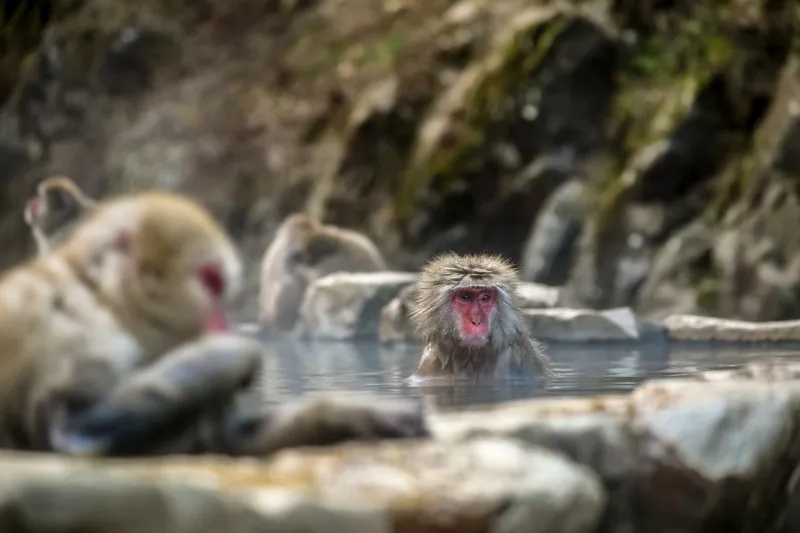
The Comfort Contradiction
Let's be honest. Most Americans take a shower the way they check email — fast, functional, already thinking about the next thing. The idea of sitting in a scalding outdoor bath, getting out, cooling down, and getting back in again sounds like something you'd need to be talked into at a wellness retreat you weren't sure about booking in the first place.
And yet, something strange keeps happening to American travelers who make it to places like Hirayu Onsen in the Japanese Alps. They arrive skeptical. They leave converted. And a surprising number of them start reorganizing their lives around getting back.
So what's actually going on here?
Structured Discomfort Is Different From Random Discomfort
There's a reason cold showers never caught on the way wellness influencers hoped they would. Stepping into a freezing shower in your own bathroom, alone, with no context and no ritual around it, just feels bad. There's no arc to it. No reward built into the structure. Just shock, followed by the relief of turning the temperature up.
Onsen bathing is different in ways that matter psychologically.
"The water here at Hirayu is around 40 to 42 degrees Celsius — that's roughly 104 to 108 Fahrenheit for your American guests," says Kenji Matsumoto, who has managed a small family-run ryokan near Hirayu for over two decades. "It's hot. Real hot. But the way you enter, the way you rest, the way you cool down and return — there's a shape to it. People feel held by that shape, even if they don't have words for it yet."
That shape is the key. Traditional onsen practice isn't about tolerating heat for the sake of it. It's a rhythm — enter slowly, let your body adjust, rest at the edge, cool down, return. Repeat. The discomfort is never arbitrary. It's always in service of something that comes next.
For Americans who live in a culture of randomized stress and unpredictable demands, that structure is quietly revolutionary.
Why the Temperature Cycle Works on American Brains
Sarah Tillman, a physical therapist from Portland, Oregon, visited Hirayu Onsen last autumn expecting to enjoy the scenery and maybe get a good night's sleep. She didn't expect to spend three days thinking about why the bathing ritual was making her cry.
"I don't mean that in a bad way," she says, laughing. "It was like my nervous system finally exhaled. I kept going in, getting out, sitting in the cool air, going back in. And somewhere in that cycle, something just — released. I think I'd been holding tension I didn't even know I had."
What Sarah experienced has a physiological explanation. The alternation between heat immersion and cooling activates the parasympathetic nervous system — the part of your biology responsible for rest and recovery. Your heart rate slows. Cortisol drops. Blood vessels dilate and contract in a rhythm that essentially massages your circulatory system from the inside.
But the psychological component might be even more interesting. The onsen cycle gives you something Americans rarely get: a clear, sensory signal that it's okay to stop. You're not just lying on a couch telling yourself to relax while your phone buzzes on the nightstand. You're physically immersed in an experience that demands your full presence. The heat makes distraction impossible. You're just there, in your body, in the water.
The Permission Structure Americans Are Missing
One thing that comes up again and again when you talk to American travelers about their onsen experiences is the word permission. Not permission from the staff or the ryokan — permission from themselves.
"I kept waiting to feel guilty," admits Marcus Webb, a financial analyst from Chicago who spent a week in the Japanese Alps after a particularly brutal quarter at work. "Like, I'm just sitting here. In hot water. Doing nothing. And nobody's judging me. Nobody's expecting me to be somewhere else. The whole structure of the place says: this is the thing you're supposed to be doing right now. That was genuinely hard to process at first."
This is the paradox at the heart of onsen culture for American visitors. We don't struggle with the heat. We struggle with the stillness. The heat is actually what makes the stillness survivable — it gives your body something so immediate and physical to focus on that your mind doesn't have the bandwidth to feel guilty about not being productive.
You're not doing nothing. You're bathing. Properly. In a way that takes time and attention and a certain kind of presence. That reframe matters more than it probably should.
What Onsen Owners Have Noticed About American Guests
Kenji Matsumoto has hosted thousands of international visitors over the years, and he's developed a quiet theory about Americans specifically.
"American guests often arrive very wound up," he says, choosing his words carefully. "Not rude — just fast. Asking questions, taking photos, wanting to understand the rules. By the second or third bath, something changes. They get quieter. They stop asking what comes next. They start to just be in it."
He's noticed that the transition usually happens somewhere in the middle of the first full day. Not at the first bath, which is still too novel and unfamiliar. Not at the last, which carries the weight of leaving. Somewhere in the middle, when the rhythm has become familiar enough to stop being a performance and start being an experience.
"That's the moment I love," he says. "When I see a guest sitting at the edge of the bath, looking at the mountains, and they're not doing anything at all. Just looking. For Americans, that seems to be very difficult to arrive at. But the onsen gets them there."
Slow Is a Skill, and Hot Springs Teach It
There's a version of wellness culture in the US that's still fundamentally about optimization — cold plunges timed to the minute, meditation apps tracking your sessions, recovery scores on your smartwatch. It's improvement dressed up as rest.
Traditional onsen bathing resists that framing almost completely. There's no metric for how well you soaked. No score for how deeply you relaxed. The water doesn't care about your productivity. It just holds you, at whatever temperature the earth decided to send it up at, for as long as you're willing to stay.
For Americans who have spent years optimizing their downtime, that absence of measurement is, paradoxically, the most demanding thing about the whole experience.
And maybe that's exactly why it works.
You don't fall in love with Japanese bathing rituals despite being someone who hates cold showers. You fall in love with them because the onsen solves the same problem the cold shower was trying to solve — getting you out of your head, into your body, and briefly, mercifully, present — but it does it in a way that's actually sustainable. Warm. Structured. Beautiful. And surrounded, if you're lucky, by mountains that have been doing this a lot longer than any of us.